As healthcare continues its shift toward digital ecosystems, Electronic Health Records (EHRs) have become the backbone of patient data management. While they improve efficiency and accessibility, they also introduce serious security challenges. Patient records contain highly sensitive information, making them one of the most targeted assets in the healthcare industry.
To answer this, it’s essential to look beyond surface-level features and understand the mechanisms that truly protect your data, namely, data encryption, access logs, and audit trails. These are not just technical components; they are fundamental to ensuring compliance, accountability, and trust.
Healthcare organizations are increasingly under pressure to protect patient data, not just from external cyberattacks but also from internal misuse. A single breach can result in financial penalties, operational disruption, and long-term reputational damage.
More importantly, patient trust is directly tied to how securely their data is handled. When patients share their information, they expect it to remain confidential and protected.
A secure EHR system helps organizations:
Security, therefore, is not just an IT concern; it is a core operational priority.
Data encryption serves as the first and most critical layer of defense in any EHR system. It works by converting readable data into an encoded format that can only be accessed with the correct decryption key. This ensures that even if data is intercepted or accessed without authorization, it remains unintelligible.
In modern healthcare systems, encryption operates at multiple levels to ensure comprehensive protection.
Without these layers in place, healthcare organizations expose themselves to unnecessary risk, especially in cloud-based environments where data is constantly being accessed and shared.
Encryption is not just a recommended feature; it is a foundational requirement for any EHR system claiming to be secure and compliant.
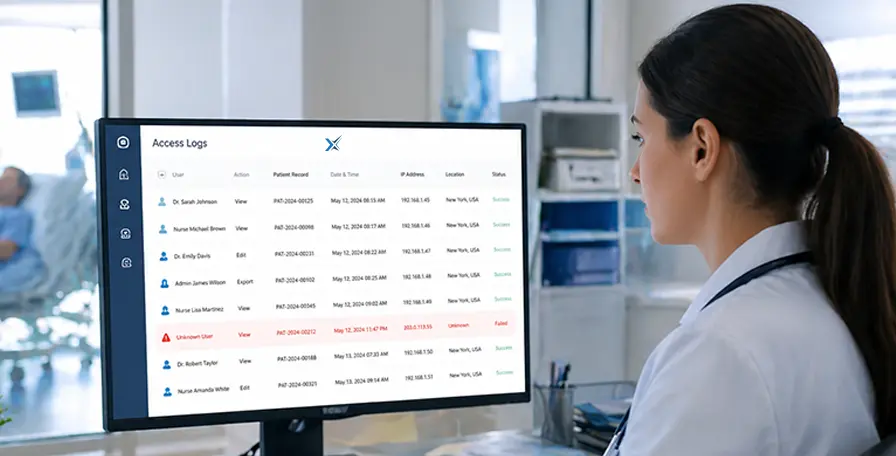
While encryption protects data from external threats, access logs focus on internal visibility. They provide a detailed record of user activity, answering critical questions such as who accessed specific data, when it was accessed, and from where.
This level of transparency is essential in a healthcare setting where multiple users interact with patient records daily.In modern healthcare systems, encryption operates at multiple levels to ensure comprehensive protection.
Access logs enable organizations to:
For example, if an employee attempts to access patient records outside their role or working hours, access logs can immediately flag this activity. This proactive monitoring allows organizations to respond quickly before issues escalate.
In essence, access logs act as a continuous surveillance system within your EHR.
Audit trails build upon access logs by providing a complete and chronological record of all actions performed within the system. While access logs tell you who accessed what, audit trails tell you what they did with it.
This distinction is critical when it comes to compliance and legal accountability.
Audit trails capture a wide range of system activities, including:
These records are essential during compliance audits, as they provide verifiable proof that patient data is being handled appropriately.
Without audit trails, organizations cannot trace errors, investigate incidents, or demonstrate compliance with regulatory standards. In a highly regulated environment like US healthcare, that is a risk no provider can afford.
Choosing the right EHR system requires a thorough understanding of the security features it offers. While many platforms claim to be secure, only a few provide the comprehensive protections necessary to meet modern healthcare demands.
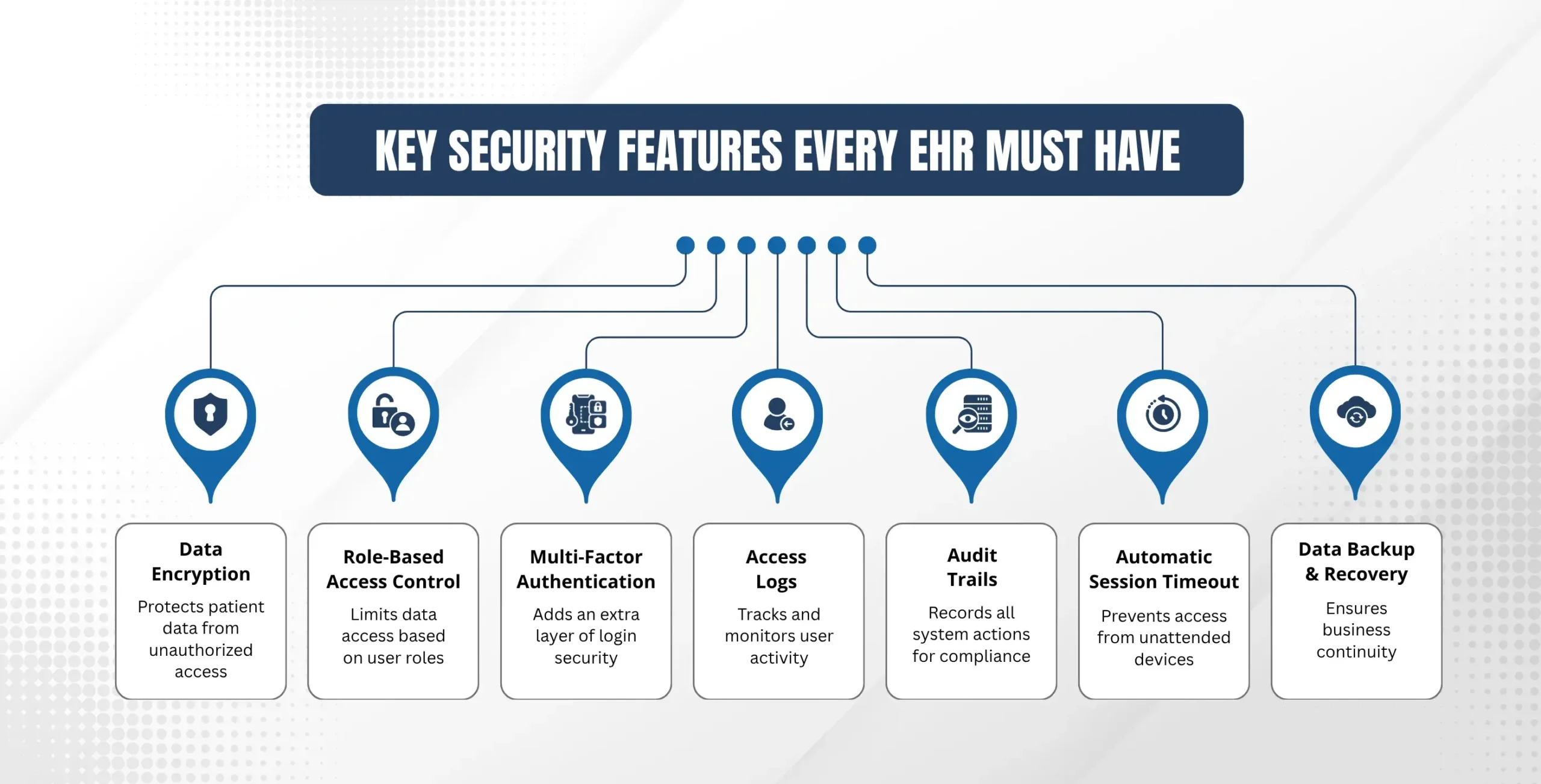
Below is a quick overview of essential security features and their importance:
Beyond these core features, organizations should also consider factors like system updates, cloud security standards, and scalability. A secure EHR is not just about meeting today’s needs, it must be prepared for tomorrow’s challenges.
Even with advanced systems in place, vulnerabilities can arise if security measures are not properly implemented or maintained. Understanding these risks is the first step toward mitigating them.
Some of the most common threats include:
These risks often stem from a combination of outdated technology and poor security practices. Addressing them requires both the right tools and a proactive approach to system management.
Selecting or upgrading an EHR system should always involve a detailed security evaluation. Decision-makers must go beyond marketing claims and assess whether the system truly meets compliance and security standards.
Start by asking vendors key questions such as:
In addition to these questions, organizations should request product demonstrations, review compliance certifications, and assess how well the system integrates with existing workflows.
A secure EHR system should not only protect your data but also provide confidence and clarity in how that protection is achieved.
Maximus EHR is designed with a security-first approach, ensuring that healthcare providers can operate with confidence in an increasingly complex digital landscape.
By combining these features into a single, integrated system, Maximus EHR enables healthcare organizations to minimize risk while maximizing operational efficiency.
EHR security is no longer a secondary consideration—it is a fundamental requirement for any healthcare organization. Data encryption, access logs, and audit trails work together to create a secure and transparent environment where patient information is protected at every level.
For healthcare providers and administrators in the United States, the stakes are particularly high. Compliance requirements are strict, and the consequences of failure can be severe.
Maximus EHR delivers enterprise-grade security, encryption, and compliance tools to safeguard your data. Start your free trial today.