10 Best EHR Systems in the USA for 2026

10 Best EHR System in 2026

Table of Contents

A Comprehensive Guide for Healthcare Providers and Administrators

Choosing the right Electronic Health Record (EHR) system is one of the most important technology decisions for any healthcare organization. Whether you manage a small outpatient practice, a specialty clinic, or a multi-location healthcare group, your EHR directly affects patient care, documentation quality, compliance, and operational efficiency. With evolving regulations, rising patient expectations, and the growing need for data-driven decision-making, US providers and administrators are actively seeking modern EHR solutions that streamline workflows and improve outcomes.
To support that decision-making, this guide highlights 10 of the best EHR systems used across the United States in 2025. Each offers a unique combination of features, integrations, and usability benefits. The goal of this list is not to compare or rank systems, but to provide healthcare teams with a clear, neutral overview of recognized industry solutions. At the end of the list, we also highlight Maximus EHR, an innovative choice that improves documentation speed, reduces administrative workload, and supports compliance across diverse US specialties.

What to Consider When Choosing an EHR System

Before selecting an EHR, administrators and providers typically evaluate:

Ease of Use

An intuitive interface reduces training time, minimizes documentation errors, and increases provider adoption.

Interoperability

The ability to exchange data with labs, pharmacies, hospitals, clearinghouses, other EHRs, and government programs is crucial for coordinated care.

Specialty Support

Templates, workflows, and clinical decision tools should align with your specialty—whether it’s family medicine, behavioral health, cardiology, dentistry, dialysis, or others.

Compliance & Security

EHRs must support HIPAA standards, federal reporting requirements, and secure data exchange.

Revenue Cycle Integration

Features like automated coding, claim scrubbing, eligibility checks, and RCM integration help practices improve financial performance.

AI & Automation

Modern EHRs increasingly include AI-driven alerts, predictive insights, and automated documentation support.

Scalability

Growing practices need systems that evolve with them, whether adding providers or expanding services.
Top 10 EHR Systems in the USA

Top 10 EHR Systems in the USA

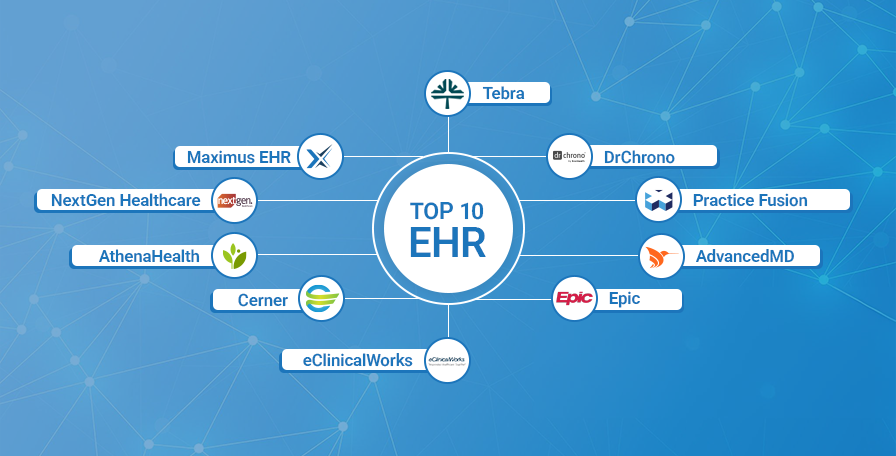
This list includes widely recognized EHR platforms used across the country, each offering solutions for different sizes and types of practices.

Epic

Epic is one of the most established enterprise-level EHRs in the US. Known for its robust clinical features and strong interoperability, it is commonly used in large hospitals and health systems. It supports advanced reporting, telehealth, patient portals, and comprehensive specialty modules.

Cerner (Oracle Health)

Cerner, now part of Oracle Health, offers a flexible and scalable EHR platform adopted by hospitals, health networks, and outpatient clinics. It provides strong interoperability tools, customizable clinical workflows, and advanced integration with population health management systems.

Athenahealth

Athenahealth’s cloud-based EHR is popular among ambulatory practices due to its usability, revenue cycle integrations, and automated workflows. It offers strong analytics tools and supports numerous medical specialties. Its network-based model helps practices optimize documentation and patient engagement.

AdvancedMD

AdvancedMD is designed for independent practices seeking a fully integrated clinical and billing solution. It offers appointment scheduling, telemedicine, patient engagement tools, and customizable clinical templates. Its modular design makes it suitable for growing practices.

Tebra

Tebra, the unified platform formed by the merger of Kareo and PatientPop, brings together practice management, billing, and patient engagement under one ecosystem. It is tailored for small to mid-sized practices looking for an all-in-one digital healthcare infrastructure with marketing and engagement capabilities.

eClinicalWorks

eClinicalWorks offers a feature-rich EHR with tools for clinical documentation, population health, and telehealth. Its cloud-based platform supports interoperability and provides intuitive modules for numerous specialties, especially primary care and multispecialty practices.

DrChrono

DrChrono is known for its mobile-first approach, offering iPad-based documentation, e-prescribing, and medical forms. It suits small practices seeking flexibility and mobility. The platform also includes billing tools, patient reminders, and integrations with third-party apps.

NextGen Healthcare

NextGen is widely used in specialty and ambulatory clinics. It offers advanced interoperability, customizable workflows, and integrated revenue cycle tools. The platform supports analytics, telehealth, and population health management features.

Practice Fusion

Practice Fusion is a cloud-based EHR widely used by small and independent practices across the United States. It offers an intuitive interface, easy charting tools, and flexible templates designed to support a range of specialties. The platform provides e-prescribing, lab integrations, and patient engagement features, making it a practical option for practices looking for a simple, accessible EHR solution.

Maximus EHR

Maximus EHR is an emerging choice for US providers who want a modern, easy-to-use system with powerful documentation and compliance support. Built to improve clinical efficiency and reduce administrative strain, it offers a combination of AI-driven decision assistance, specialty-focused templates, and interoperable architecture tailored for modern healthcare demands.

Why Maximus EHR Stands Out

Maximus EHR provides a streamlined and intelligent clinical experience designed to support providers in fast-paced environments. It offers the essential components of a modern EHR while introducing newer advancements that address common pain points for healthcare teams.

Conclusion

The EHR landscape in the United States continues to evolve as practices prioritize efficiency, compliance, and patient-centered care. The systems highlighted above represent some of the most widely used and trusted EHR options for 2026, each offering different advantages depending on the size and specialty of the practice.
For organizations seeking a modern, intuitive, and specialty-friendly system built to streamline documentation and support clinical decision-making, Maximus EHR offers a compelling solution. By combining AI-driven intelligence, strong interoperability, and ready-to-use templates, it helps healthcare teams work more efficiently and deliver better care.
As you evaluate your options, consider scheduling a personalized demo of Maximus EHR to explore how it can support the needs of your practice and help improve operational outcomes.

Find the Right EHR for Your Practice

Maximize efficiency, reduce errors, and stay compliant with ease. Start your free trial and modernize your patient care workflow.

FAQs

What is the most important factor to consider when choosing an EHR system?
The most important factor is how well the EHR aligns with your practice’s size, specialty, and workflow needs. Ease of use, interoperability, compliance features, and revenue cycle integration should all be evaluated to ensure long-term efficiency and adoption.
Are cloud-based EHR systems better for small and mid-sized practices?
Yes. Cloud-based EHRs are generally easier to implement, require fewer IT resources, and offer better scalability for growing practices. They also support remote access, automatic updates, and strong security measures, making them ideal for small to mid-sized clinics.
How do I know if an EHR supports my specialty?
Most EHR vendors provide specialty-specific templates and workflows. When evaluating systems, ask for a demo that shows templates, clinical forms, and charting tools tailored to your specialty. Look for examples that match areas like behavioral health, dialysis, dentistry, cardiology, or primary care.
What makes Maximus EHR different from other EHR platforms?
Maximus EHR combines AI-driven clinical decision support with specialty-focused templates and streamlined charting tools. It is built to reduce administrative burden, improve documentation accuracy, and support compliance, making it a strong option for practices that want a modern and intuitive EHR experience.
How long does it take to implement a new EHR system?
Implementation timelines vary by vendor, practice size, and data migration needs. Most cloud-based EHRs, including Maximus EHR, have faster implementation cycles—ranging from a few weeks to a few months, compared to traditional on-premise systems.