Telehealth and Remote Patient Monitoring (RPM) have become essential components of modern healthcare delivery in the United States. What once served as a convenience has now evolved into a primary channel for patient engagement, chronic care management, and operational scalability.
However, this transformation comes with a growing responsibility – compliance.
Healthcare providers are now expected to manage not only patient care but also the secure handling of sensitive data, accurate documentation of virtual encounters, and adherence to evolving billing regulations. In a digital-first care model, even minor compliance gaps can lead to serious consequences, including claim denials, audits, or legal penalties.
This is where your EHR system plays a critical role. It is no longer just a record-keeping tool; it is the foundation of compliant, efficient, and scalable telehealth operations.
Compliance in telehealth is fundamentally about maintaining trust, accuracy, and security in a decentralized care environment. Unlike traditional clinical settings, telehealth introduces multiple digital touchpoints, from video consultations to remote device data, each of which must be carefully managed.
Providers must ensure that patient information is protected at every stage, from data transmission to storage. At the same time, every interaction must be properly documented to support both clinical decision-making and billing requirements.
What makes telehealth compliance particularly challenging is its dynamic nature. Regulations continue to evolve, and providers must stay aligned without disrupting their workflows. This requires not just awareness, but the ability to operationalize compliance through reliable systems and processes.
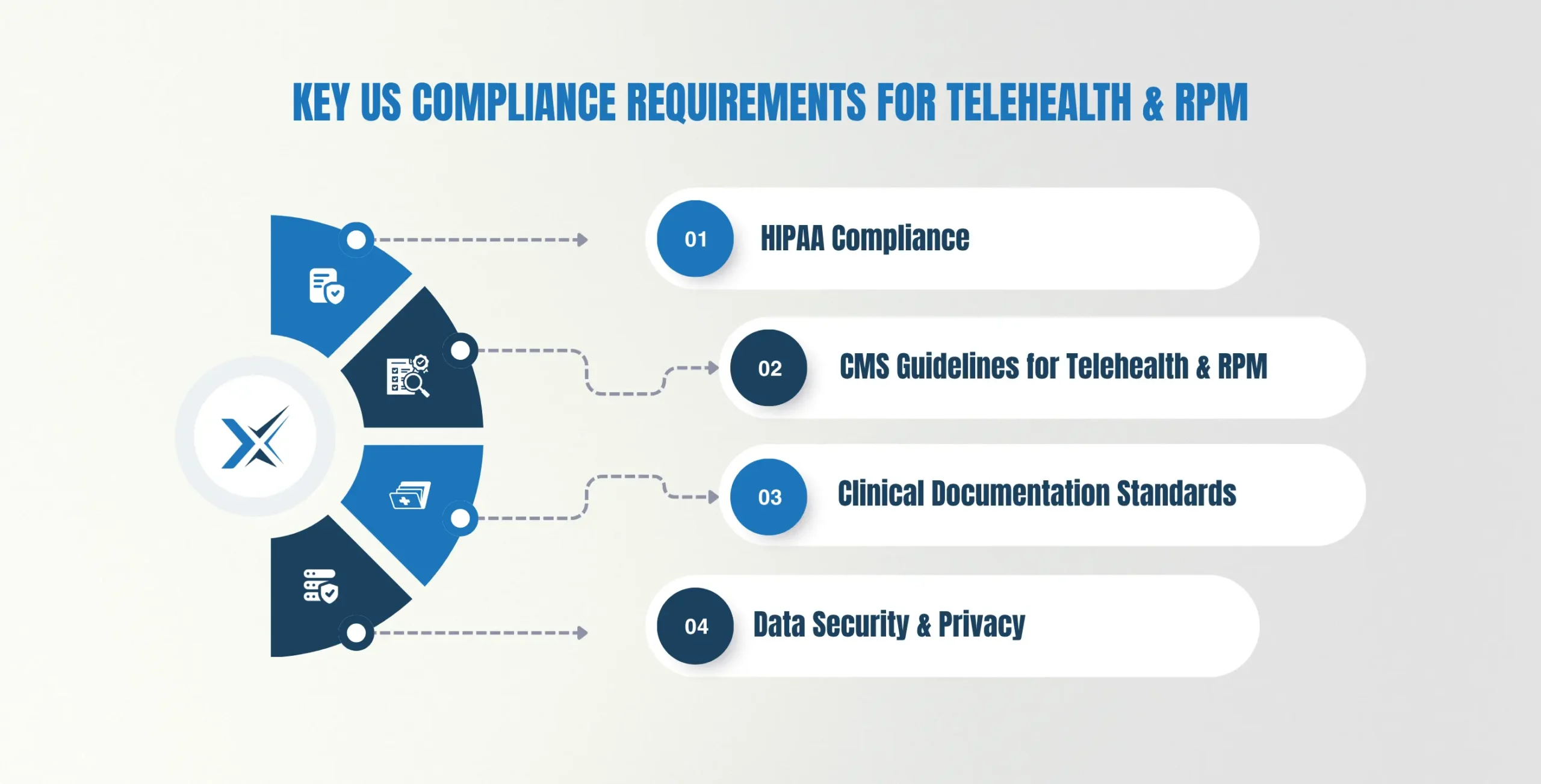
To operate successfully in a telehealth environment, providers must align with several key regulatory frameworks that govern data privacy, service delivery, and reimbursement.
HIPAA remains the cornerstone of patient data protection in the US. In the context of telehealth, this extends beyond traditional recordkeeping to include digital communications such as video calls, messaging, and remote monitoring data.
Providers must implement safeguards that ensure patient information is encrypted, securely stored, and accessible only to authorized personnel. Any failure to meet these standards can result in significant penalties and reputational damage.
The Centers for Medicare & Medicaid Services (CMS) establishes the rules for how telehealth and RPM services are delivered and reimbursed. These guidelines are critical because they directly impact revenue and operational sustainability.
Compliance with CMS requires accurate documentation, correct use of billing codes, and adherence to service eligibility criteria. Even small discrepancies can lead to claim denials or audits, making precision essential.
In telehealth, documentation serves as both a clinical record and a legal safeguard. Every virtual interaction must be recorded in a way that clearly reflects the care provided.
This includes capturing the duration of the visit, patient consent, clinical observations, and treatment decisions. Proper documentation not only ensures compliance but also supports continuity of care and accurate billing.
With the increasing reliance on digital systems, cybersecurity has become a central aspect of compliance. Healthcare organizations must protect against unauthorized access, data breaches, and system vulnerabilities.
A strong security framework ensures that patient data remains confidential while maintaining system integrity and availability.
Despite clear regulatory guidelines, many healthcare providers face ongoing challenges in maintaining compliance. These challenges are often rooted in operational inefficiencies rather than a lack of awareness.
One of the most significant issues is the use of disconnected systems. When telehealth platforms, EHRs, and billing tools are not integrated, it creates gaps in data flow. These gaps can result in incomplete documentation, billing inconsistencies, and increased audit risk.
Manual processes further complicate compliance efforts. Relying on staff to enter data manually increases the likelihood of human error, particularly when dealing with complex telehealth billing requirements.
Additionally, providers often struggle with limited visibility into their compliance status. Without real-time monitoring or reporting tools, it becomes difficult to identify and address issues before they escalate.
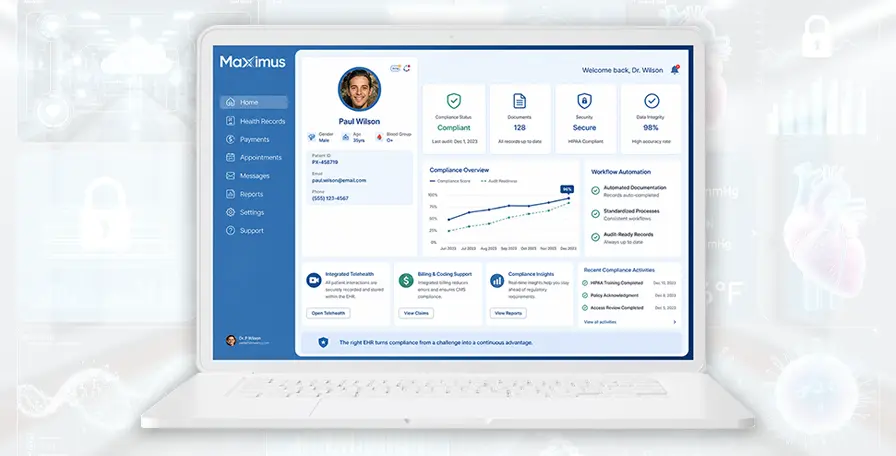
A modern, integrated EHR system addresses these challenges by bringing all aspects of care delivery into a single, unified platform. Instead of managing multiple tools, providers can streamline workflows and reduce the risk of errors.
Automation plays a key role here. By automating documentation and standardizing processes, an EHR ensures that records are complete, consistent, and audit-ready. Integrated telehealth features further enhance compliance by keeping all patient interactions within a secure environment.
Billing and coding support also becomes more reliable when embedded within the same system. This reduces discrepancies and ensures alignment with CMS requirements.
Ultimately, the right EHR transforms compliance from a reactive task into a proactive, system-driven process.
To maintain compliance in a rapidly evolving healthcare environment, providers need a structured approach. The following checklist highlights the essential areas that should be consistently monitored and optimized:
Maximus EHR is designed to reduce the operational burden of compliance while improving accuracy and efficiency. Its capabilities are built to address the most common pain points faced by healthcare providers:
Compliance is often perceived as a regulatory necessity, but it also plays a crucial role in driving operational success. When systems and processes are aligned with compliance standards, healthcare organizations experience smoother workflows, improved revenue cycles, and stronger patient relationships.
On the other hand, poor compliance can lead to financial losses, increased administrative strain, and reputational damage. In a competitive healthcare landscape, maintaining compliance is not just about avoiding penalties; it is about building a sustainable and scalable practice.
As telehealth and Remote Patient Monitoring continue to expand, compliance will remain a central factor in healthcare delivery. Providers must navigate complex regulations while maintaining efficiency and delivering high-quality care.
Achieving this balance requires more than manual effort. It requires a system that is designed to support compliance at every level.
Maximus EHR enables healthcare providers to manage telehealth and RPM compliance with confidence and ease. With a fully integrated, AI-supported platform, you can streamline operations, reduce risk, and focus on what matters most, delivering exceptional patient care.