Implementing a new Electronic Health Record (EHR) system is not simply a software upgrade; it is an operational transformation. For healthcare providers and administrators across the United States, understanding the EHR implementation timeline is essential to ensuring minimal disruption, regulatory compliance, and long-term efficiency.
This guide outlines what healthcare organizations can realistically expect during the first 90 days of EHR implementation, covering onboarding, staff training, and go-live preparation in detail.
The implementation phase determines how effectively an EHR system integrates into daily clinical and administrative operations. While many decision-makers focus on software features during vendor selection, the true success of an EHR depends on how well it is implemented.
In the United States, this process carries additional complexity. Practices must ensure HIPAA compliance, maintain continuity of patient care, align billing workflows with CMS guidelines, and avoid revenue cycle disruptions. Without structured onboarding and training, even a technically advanced system can create workflow bottlenecks and staff frustration.
The first 90 days are therefore not just about installing software; they are about stabilizing operations and building internal confidence.
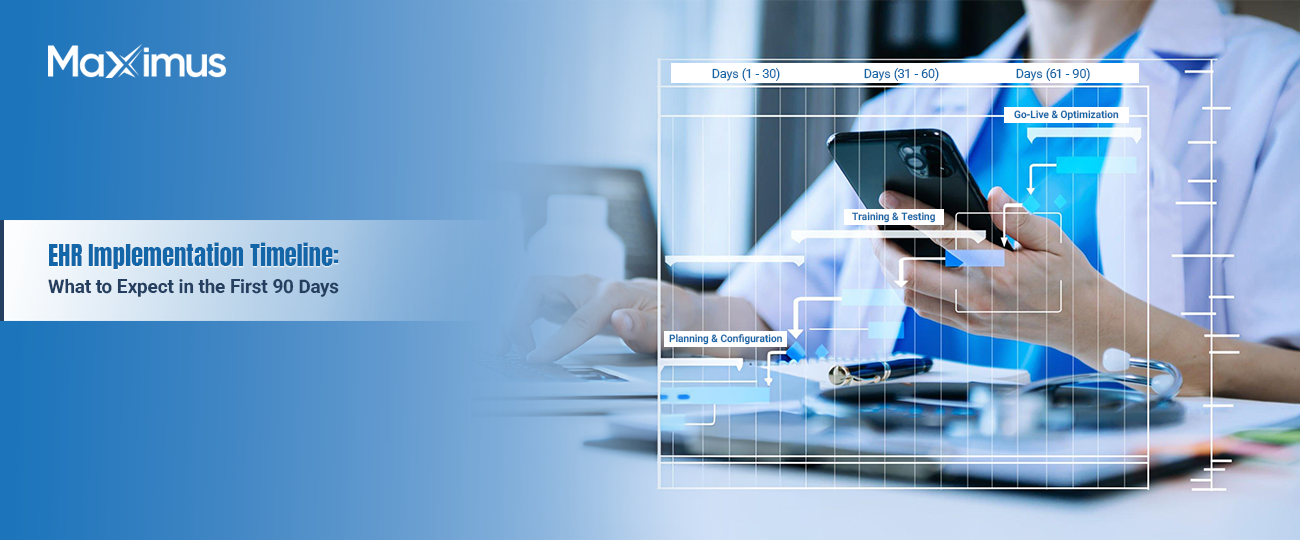
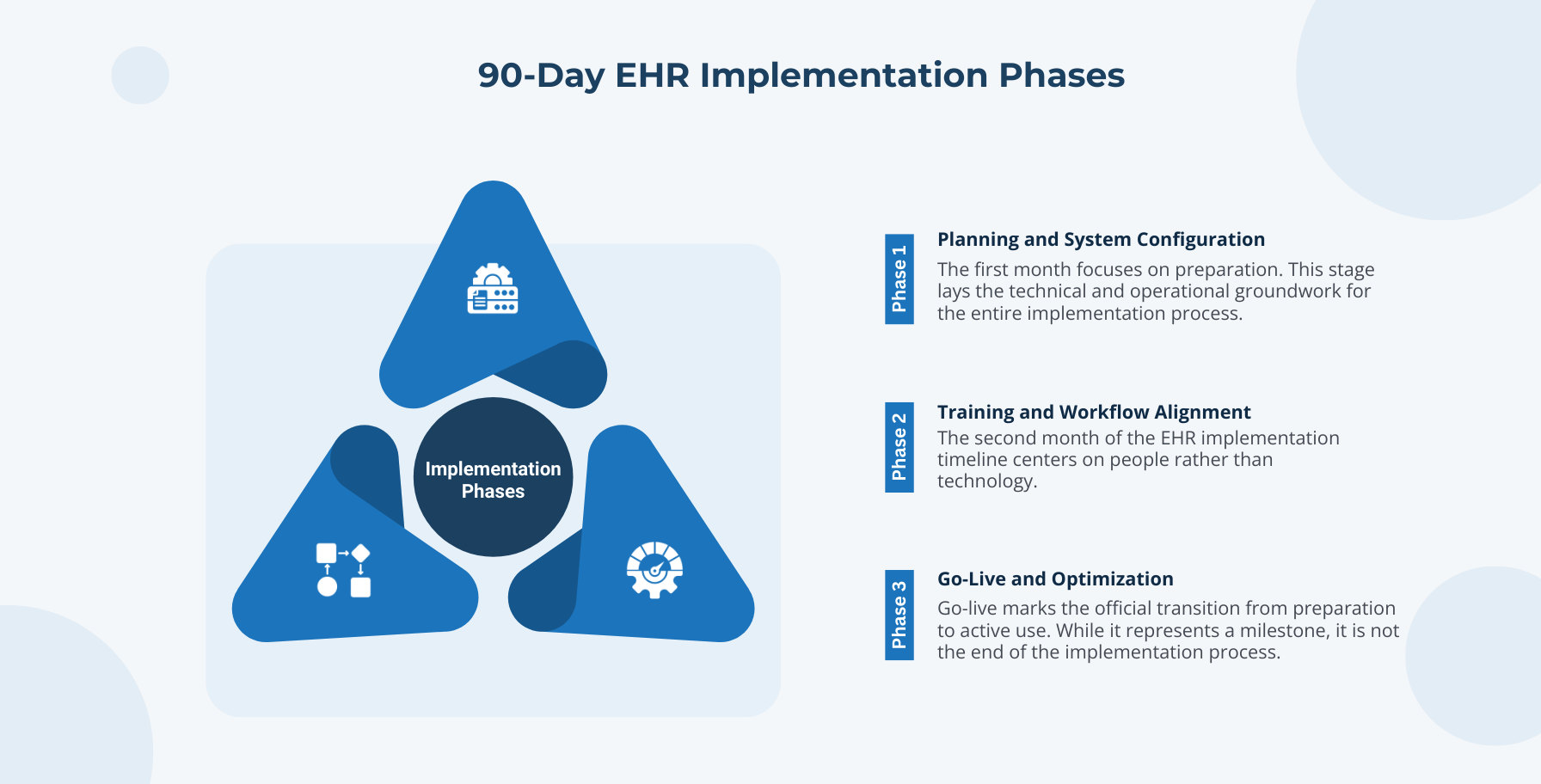
Although timelines vary depending on practice size and specialty, most successful implementations follow a structured three-phase approach.
Each phase builds upon the previous one, creating a gradual and controlled transition rather than a disruptive shift.
The first month focuses on preparation. This stage lays the technical and operational groundwork for the entire implementation process.
It begins with a structured kickoff meeting between the healthcare organization and the EHR vendor. During this stage, project leads are assigned, objectives are clarified, and expectations regarding timeline and communication are established. Clear leadership alignment is especially important for healthcare administrators overseeing multi-provider practices.
Following kickoff, workflow analysis becomes the primary focus. Existing processes, from patient intake to documentation and billing, must be carefully reviewed and mapped into the new system. This is where many implementations either succeed or struggle. If workflows are simply copied without optimization, inefficiencies carry over into the new system. However, if processes are thoughtfully redesigned, practices often discover opportunities for automation and improved documentation accuracy.
Data migration also occurs during this phase. Patient demographics, scheduling data, and selected clinical records are securely transferred into the new platform. For US-based organizations, maintaining HIPAA-compliant data transfer protocols is non-negotiable. Proper planning during this stage prevents data inconsistencies that could affect patient care continuity.
By the end of the first 30 days, the EHR system is configured and structurally ready, but staff readiness remains the next major focus.
The second month of the EHR implementation timeline centers on people rather than technology.
Training during this phase must go beyond general system navigation. Providers need to understand documentation workflows specific to their specialty. Front-desk teams must become comfortable with scheduling and eligibility verification tools. Billing staff must learn how claims are generated, scrubbed, and submitted within the new system.
When training is structured and role-based, staff confidence increases dramatically. Without it, productivity often declines at go-live.
In addition to formal training sessions, practices should conduct workflow simulations. Running mock patient encounters, test appointments, and sample claim submissions allows teams to identify gaps before patients are involved. This proactive testing reduces stress during launch and builds familiarity with daily operations inside the new platform.
Leadership involvement during this phase is equally important. Change management requires consistent communication and reassurance. Providers accustomed to older systems may initially resist new workflows. Addressing concerns early and demonstrating efficiency improvements helps smooth adoption.
By the end of the second month, staff should feel comfortable navigating the system and performing their core responsibilities within it.
Go-live marks the official transition from preparation to active use. While it represents a milestone, it is not the end of the implementation process.
During the first weeks after go-live, practices may experience temporary productivity adjustments. Appointment times may be slightly longer as providers adapt to new documentation templates. Administrative teams may require additional support while managing real-time patient flow.
This adjustment period is normal. What matters most is the availability of responsive vendor support and internal super-users who can address questions quickly.
Performance monitoring becomes critical during this stage. Administrators should evaluate scheduling efficiency, documentation time, claim accuracy, and denial rates. Identifying small workflow inefficiencies early prevents long-term operational issues.
Optimization also takes place during this phase. Templates may be refined, reporting dashboards adjusted, and automation tools activated. By the end of the 90 days, the EHR should feel integrated into everyday operations rather than disruptive.
Despite careful planning, some challenges are common during EHR onboarding.
One frequent issue is underestimating training needs. Insufficient preparation often results in frustration during go-live. Another challenge involves unrealistic expectations. While modern EHR systems improve efficiency, immediate productivity gains are rare during the first few weeks. Stabilization and gradual optimization are more realistic goals.
Data migration errors can also create complications if not managed carefully. Verifying information accuracy before launch prevents disruptions in patient care.
Recognizing these risks early allows healthcare organizations to mitigate them proactively.
Successful implementation does not end at day 90. Continuous evaluation ensures that the system evolves alongside practice growth.
Practices that regularly review performance reports, update workflows, and provide refresher training sessions tend to experience stronger long-term outcomes. Viewing EHR implementation as a strategic operational initiative rather than a one-time technical installation makes a measurable difference.
When approached correctly, a well-executed EHR implementation timeline improves documentation accuracy, enhances patient engagement, streamlines billing processes, and strengthens revenue cycle performance.
From initial planning and secure data migration to role-based training and go-live optimization, our team works alongside your organization throughout every stage of the first 90 days. Rather than leaving practices to manage transition challenges independently, we provide guided support that ensures stability and confidence.
Healthcare organizations that partner with Maximus EHR benefit from a systematic implementation approach that prioritizes patient care continuity, regulatory compliance, and revenue protection.
If your organization is preparing to transition to a new EHR system, understanding the timeline is the first step. Executing it with the right partner is the next.
Maximus EHR provides structured onboarding, dedicated training, and go-live support tailored for healthcare providers across the United States.
Schedule a personalized demo today and discover how a well-managed 90-day implementation can position your practice for long-term success.
Maximus EHR offers structured onboarding, dedicated training, and go-live support. Schedule your free demo today to get started on a seamless EHR transition!