Hidden Costs of Legacy EHR Systems (and How Cloud EHRs Reduce Them)

Hidden Costs of Legacy EHR Systems (and How Cloud EHRs Reduce Them)

Table of Contents

Healthcare providers across the United States rely on Electronic Health Record (EHR) systems to manage patient data, streamline workflows, and ensure regulatory compliance. However, many practices continue to use legacy EHR systems without realizing the significant hidden costs associated with them. While these systems may appear financially manageable on the surface, their long-term operational, technical, and financial burden can directly impact efficiency, revenue, and patient care quality.

Modern cloud-based solutions like Maximus EHR offer a cost-effective alternative by reducing infrastructure expenses, improving operational efficiency, and delivering predictable pricing. Understanding the true cost of legacy systems is the first step toward making a financially sound and future-ready decision.
What Are Legacy EHR Systems?

Legacy EHR systems are older, typically on-premise platforms that require local servers, internal IT infrastructure, and manual maintenance. These systems were designed for earlier healthcare technology environments and often lack the scalability, integration capabilities, and efficiency required by modern healthcare organizations.
While many practices continue using legacy systems to avoid the perceived cost of migration, these systems often create ongoing expenses that exceed the cost of transitioning to a cloud-based EHR.
Unlike cloud-based EHR systems, legacy systems depend heavily on physical infrastructure, internal IT teams, and manual upgrades, making them increasingly expensive to operate over time.
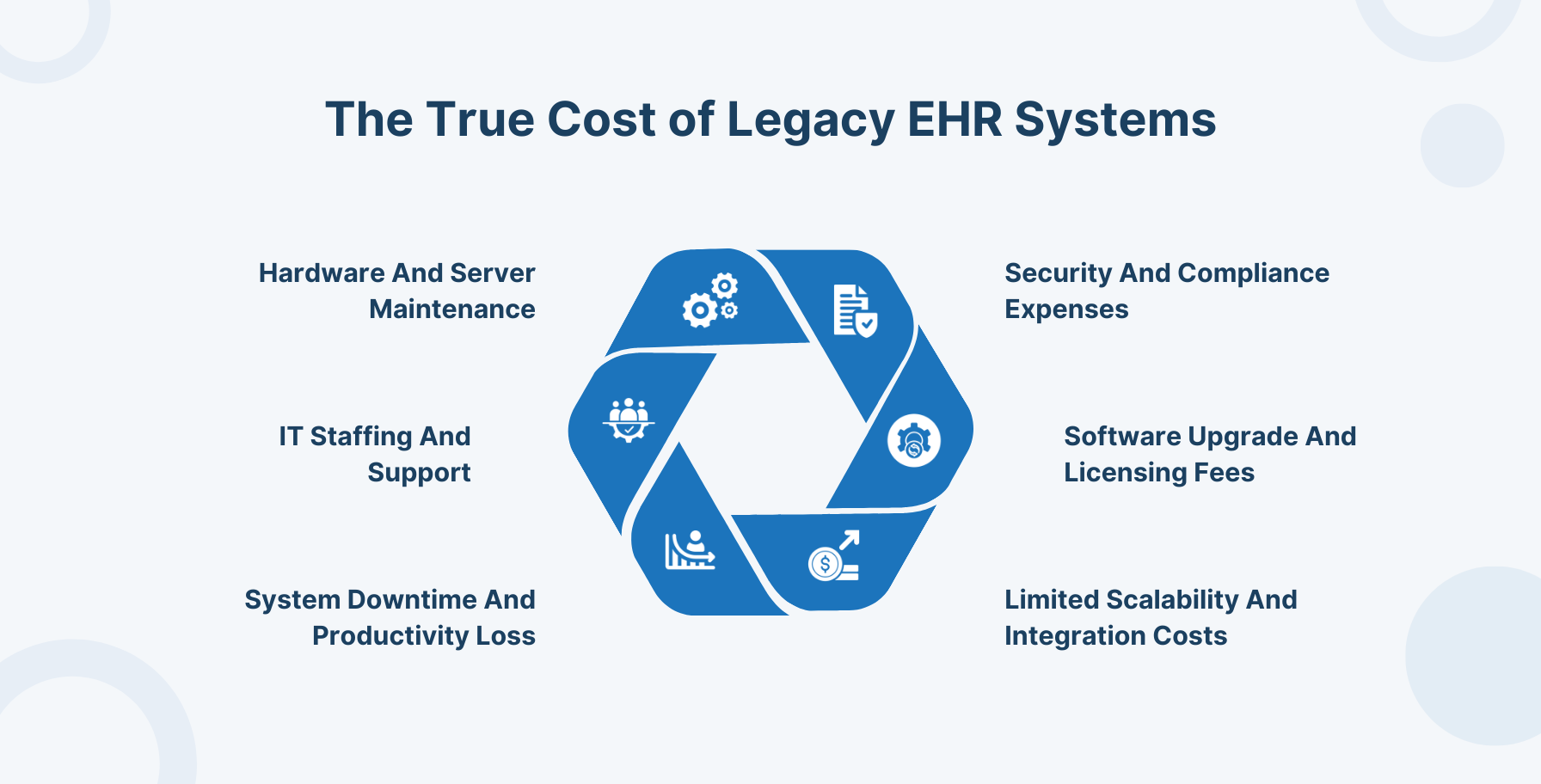
The True Cost of Legacy EHR Systems

The True Cost of Legacy EHR Systems

The cost of legacy EHR systems extends far beyond the initial investment. Many healthcare administrators underestimate the ongoing operational and hidden costs that accumulate year after year.

These costs include:

These hidden expenses increase the total cost of ownership and reduce operational efficiency.

Hidden Operational Costs That Impact Healthcare Practices

One of the most significant hidden costs of legacy EHR systems is reduced operational efficiency. Older systems often operate more slowly, require manual workarounds, and lack automation features available in modern cloud platforms.
When providers spend more time navigating outdated systems, administrative workload increases, and productivity decreases. This directly affects revenue generation, as providers spend less time seeing patients and more time managing inefficient systems.
System downtime is another critical factor. Legacy systems are more prone to crashes, outages, and performance issues. Even a few hours of downtime can disrupt scheduling, delay patient care, and result in lost revenue.
Additionally, legacy systems often lack seamless integration with modern healthcare tools such as billing platforms, telehealth systems, and analytics tools. This creates fragmented workflows and additional administrative overhead.

Infrastructure and Maintenance Costs

Legacy EHR systems require physical servers, storage devices, networking equipment, and secure infrastructure. These hardware components require regular maintenance, replacement, and upgrades.Modern EHR systems are designed to support interoperability as a core function, not an add-on. If integrations feel like constant workarounds, replacement should be seriously considered.
Healthcare organizations must also hire or outsource IT professionals to manage servers, perform backups, and ensure system reliability. These ongoing costs continue throughout the system’s lifecycle.
Hardware failures present another major financial risk. Unexpected server crashes or data storage failures can result in costly emergency repairs, operational disruption, and potential data loss.
Cloud-based systems eliminate these infrastructure expenses by hosting data securely in the cloud, removing the need for on-site hardware and reducing IT management costs.

Compliance and Security Costs

Healthcare organizations in the United States must comply with strict regulations such as HIPAA. Legacy EHR systems often lack modern security features, requiring additional investment in security tools, monitoring, and compliance management.
Maintaining compliance with outdated systems can increase administrative workload and expose organizations to a higher risk of data breaches.

Security incidents can result in:

Cloud-based EHR systems typically include built-in security updates, encryption, and compliance support, reducing risk and associated costs.

Total Cost of Ownership: Legacy EHR vs Cloud EHR

Understanding the total cost of ownership (TCO) is critical when evaluating EHR systems. Legacy systems often appear less expensive initially but become more costly over time.
Cost Category Legacy EHR Systems Cloud-Based EHR Systems
Hardware costs
High upfront and ongoing
None
IT staffing
Required for maintenance
Minimal
Software updates
Manual and costly
Included
Downtime risk
Higher
Lower
Scalability cost
Expensive upgrades
Easily scalable
Security management
Additional cost
Included
Predictable pricing
No
Yes
Cloud EHR systems provide predictable, subscription-based pricing, reducing unexpected expenses.

How Cloud EHR Systems Reduce Operational Costs

Cloud-based EHR systems are designed to eliminate many of the hidden costs associated with legacy systems. They provide centralized access, automatic updates, and scalable infrastructure without requiring local hardware.

Healthcare providers benefit from reduced IT overhead, improved system performance, and enhanced reliability.
Cloud systems also improve workflow efficiency by automating routine tasks, improving data access speed, and enabling seamless integration with other healthcare tools. This results in improved productivity and increased revenue potential.

Financial Impact Comparison

The financial difference between legacy and cloud systems becomes more significant over time.
Expense Type Legacy EHR (5-Year Cost Impact) Cloud EHR (5-Year Cost Impact)
Hardware and infrastructure
Very High
None
Maintenance and IT support
High
Low
Upgrade costs
High
Included
Downtime losses
Moderate to High
Low
Scalability cost
High
Minimal
Total cost trend
Increasing
Predictable and controlled
Cloud EHR systems offer long-term cost savings and financial predictability.

Improved Efficiency and Productivity

Cloud-based EHR systems improve operational efficiency by providing faster access to patient data, streamlined workflows, and improved system performance.
Healthcare providers can access records securely from any location, improving flexibility and enabling modern care delivery models such as telehealth.
Reduced downtime and faster system performance allow providers to focus more on patient care rather than technical issues.
This directly contributes to improved patient satisfaction and increased operational efficiency.

Scalability and Long-Term Financial Benefits

Legacy systems often require expensive upgrades when organizations grow or expand services. Cloud-based EHR systems are designed to scale easily, allowing healthcare providers to add users, features, and capabilities without major infrastructure investments.
This scalability ensures that organizations can grow without high additional costs.
Cloud systems also provide predictable pricing models, helping healthcare administrators plan budgets more effectively.
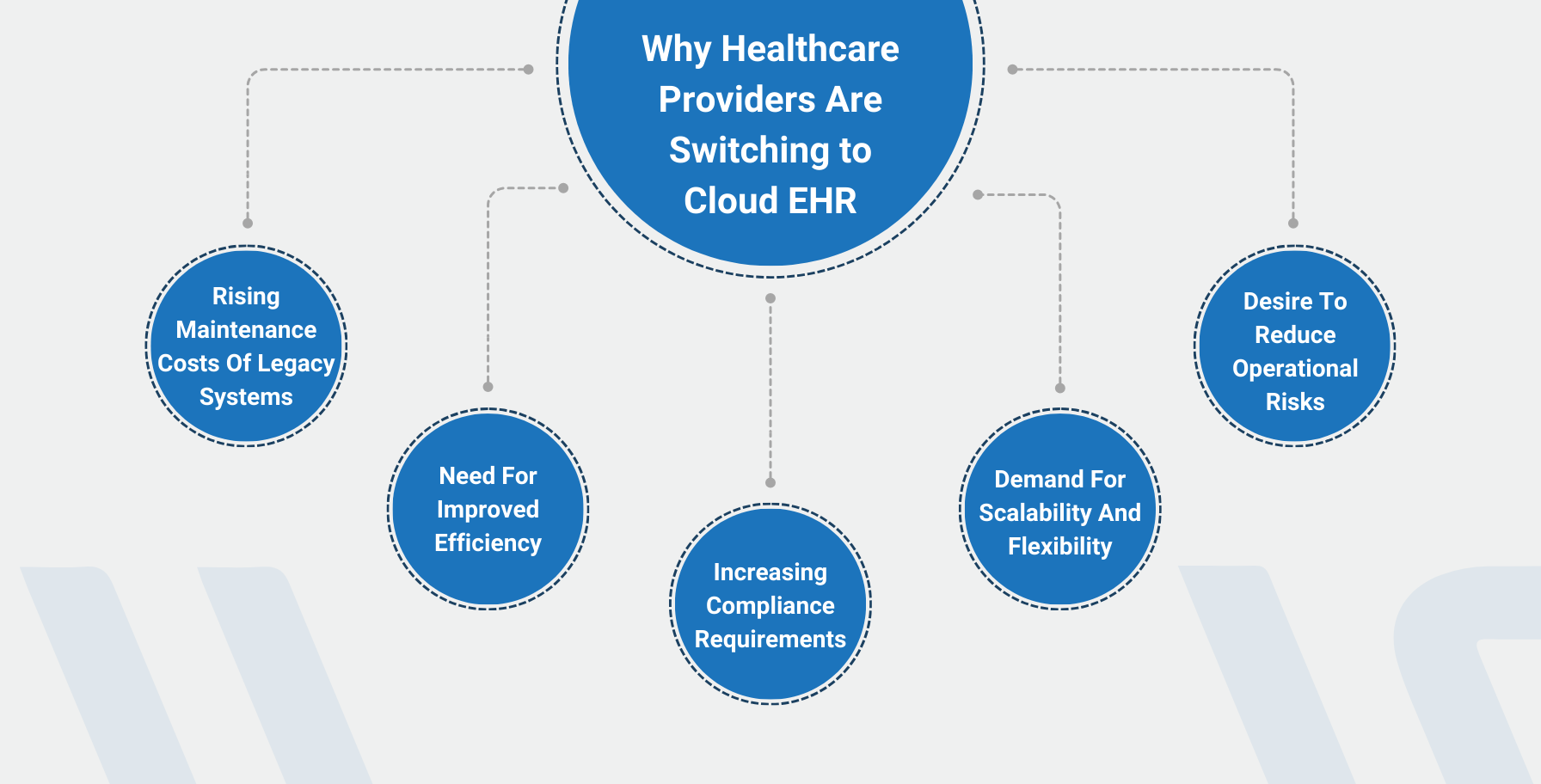
Why Healthcare Providers Are Switching to Cloud EHR

Why Healthcare Providers Are Switching to Cloud EHR

Healthcare organizations across the United States are increasingly transitioning to cloud-based EHR systems due to their financial, operational, and security benefits.

Key drivers include:

Cloud EHR systems provide a modern solution that aligns with current healthcare needs and financial priorities.

How Maximus EHR Helps Healthcare Providers Reduce Hidden Costs

Maximus EHR is a modern, cloud-based solution designed specifically to eliminate the hidden costs associated with legacy systems. By removing the need for expensive hardware, reducing IT dependency, and providing automatic updates, Maximus EHR significantly lowers operational expenses.
Its cloud infrastructure ensures high reliability, improved performance, and secure access to patient data. Built-in compliance and security features reduce risk and administrative burden.
Maximus EHR also provides scalable solutions that grow with healthcare organizations, ensuring long-term cost efficiency.
By transitioning to Maximus EHR, healthcare providers can reduce infrastructure costs, improve operational efficiency, and achieve predictable, manageable expenses.

Conclusion

Legacy EHR systems may appear cost-effective initially, but their hidden costs can significantly impact healthcare organizations over time. Infrastructure expenses, maintenance costs, downtime risks, and compliance challenges contribute to a higher total cost of ownership.
Cloud-based solutions offer a more efficient and financially sustainable alternative. By reducing infrastructure requirements, improving operational efficiency, and providing predictable pricing, cloud EHR systems help healthcare providers control costs and improve performance.

Maximus EHR provides a modern, scalable, and cost-effective solution that helps healthcare organizations eliminate hidden expenses and operate more efficiently.

Healthcare providers that transition to cloud-based systems not only reduce costs but also position themselves for long-term success in an increasingly digital healthcare environment.

Is Your EHR Holding You Back?

If you’re experiencing slow workflows, billing errors, or compliance challenges, it might be time to switch. Schedule a demo of Maximus EHR today and discover smarter solutions!

FAQs

What are the hidden costs of legacy EHR systems for healthcare providers in the US?
Legacy EHR systems often include hidden costs such as server maintenance, IT staffing, software upgrades, downtime losses, and security compliance expenses. Healthcare providers in the US also face increasing costs related to HIPAA compliance and system integrations, which significantly increase the total cost of ownership over time.
How does a cloud-based EHR reduce operational costs for medical practices?
Cloud-based EHR systems eliminate the need for on-site servers, reduce IT staffing requirements, and include automatic updates and security features. This reduces infrastructure, maintenance, and upgrade expenses while improving efficiency and minimizing costly system downtime for healthcare providers.
Is switching from a legacy EHR to a cloud EHR cost-effective for small and mid-sized practices?
Yes, switching to a cloud-based EHR is often more cost-effective for small and mid-sized healthcare practices. Cloud EHR systems provide predictable monthly pricing, eliminate hardware expenses, and reduce maintenance costs, resulting in significant long-term savings and improved financial stability.
What is the total cost of ownership difference between legacy EHR and cloud EHR systems?
Legacy EHR systems typically have a higher total cost of ownership due to hardware, maintenance, IT staffing, and upgrade costs. Cloud EHR systems offer lower and more predictable costs because infrastructure, updates, security, and support are included in the subscription, reducing unexpected expenses.
How can Maximus EHR help healthcare providers reduce EHR system costs?
Maximus EHR helps healthcare providers reduce costs by offering a secure, cloud-based platform that eliminates hardware expenses, reduces IT overhead, and provides automatic updates and compliance support. Its scalable and efficient infrastructure allows medical practices to lower operational costs while improving performance and reliability.