Physician Documentation Burnout How AI Medical Scribes Cut Charting Time by Hours a Week

Credentialing Backlogs After Hiring New Providers How to Stay Revenue-Ready
It’s 9 PM. Clinic ended three hours ago. You’re on the couch, laptop open, working through a stack of notes you didn’t have time to finish between patients. This is “pajama time,” and if you’re a physician, you already know it by a different name: unpaid overtime.
Charting has quietly become the second job nobody signed up for. And it’s not just annoying; it’s one of the biggest drivers of physician burnout in the country. The good news: a new category of tool, the AI medical scribe, is starting to give that time back. Here’s how it works, what the data actually shows, and what to look for before you bring one into your practice.

The Real Cost of Charting

The numbers back up what you already feel in your shoulders by 6 PM. AMA-backed research using EHR event-log data from over 200,000 physicians found that ambulatory physicians spend close to six hours in the EHR for every eight hours of scheduled patient time, and a meaningful chunk of that happens outside the clinic day entirely. On top of scheduled-day after-hours work, physicians are also logging in on days they aren’t even seeing patients just to keep up.
Separately, AMA survey data from 2024 found that nearly a quarter of physicians spend more than eight hours a week on the EHR outside normal working hours, and that share has been climbing year over year rather than shrinking.
Other research pooling data across specialties has put average daily EHR time in the 3.5 to 6 hour range, with documentation alone taking up a large share of that. The exact number varies by specialty and practice type, but the pattern is consistent everywhere: documentation is expanding to fill whatever time is left in the day, and then some.
This isn’t just a scheduling annoyance. Multiple peer-reviewed studies have linked EHR burden and after-hours documentation time directly to burnout, exhaustion, and physician turnover. When charting eats into time meant for family, sleep, or basic recovery, it doesn’t stay contained to work. It follows you home, every night, indefinitely.
How Ambient AI Scribes Actually Work

How Ambient AI Scribes Actually Work

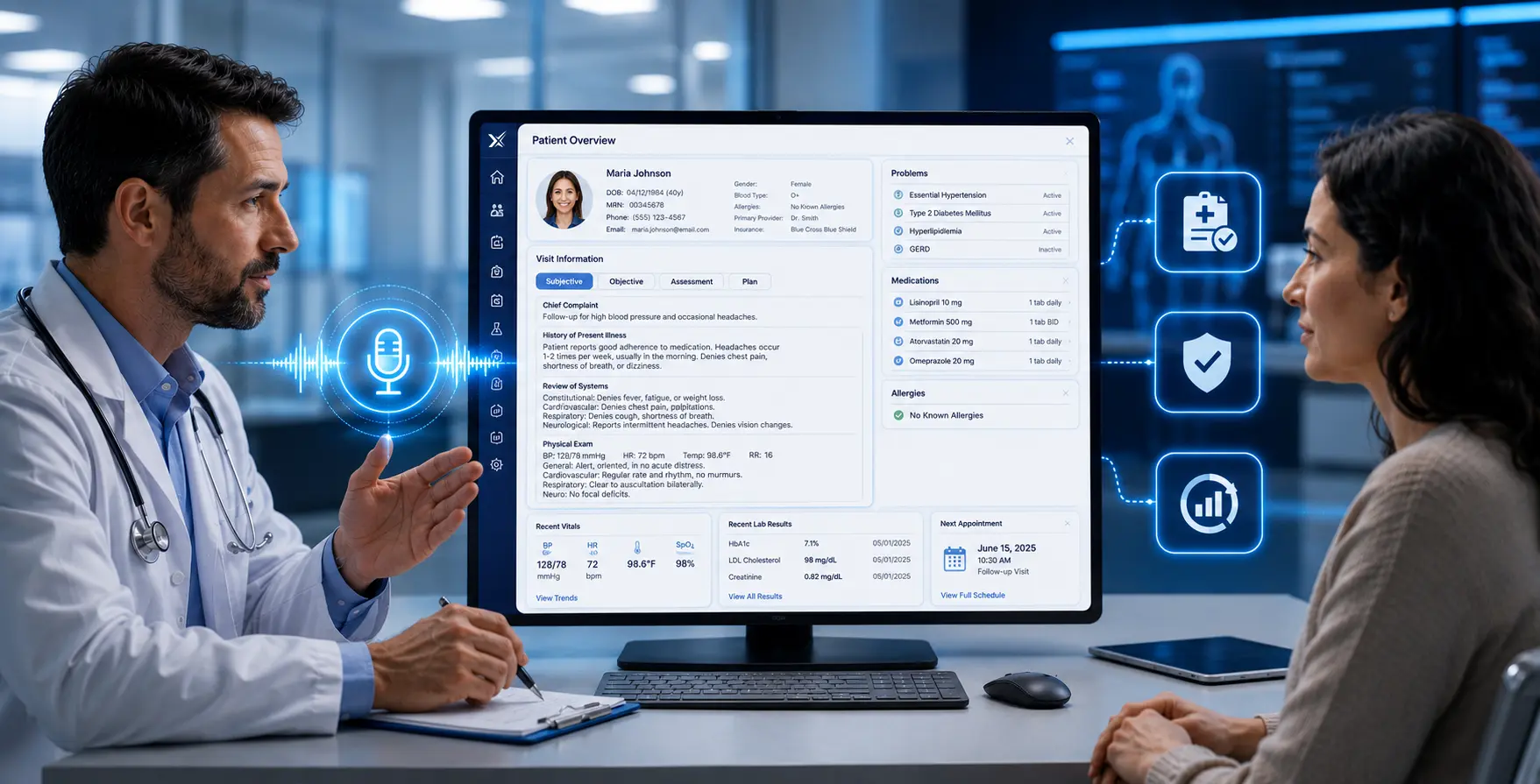
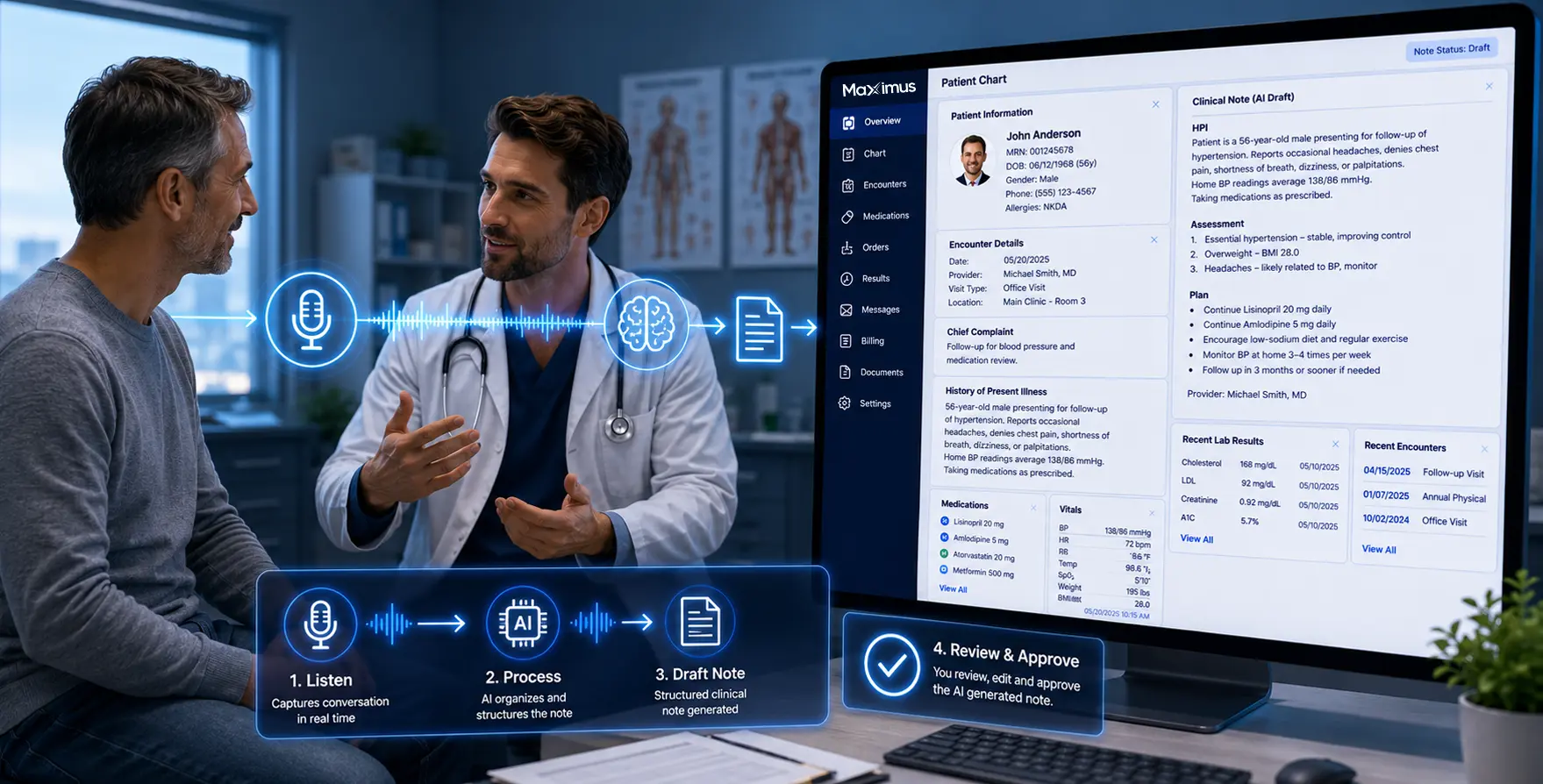
Strip away the buzzwords and an ambient AI scribe does something fairly simple: IT LISTENS.

During the visit, the tool picks up the natural conversation between physician and patient, no dictation, no stopping to type, no turning your back to the patient to face a screen. After the encounter, it processes that audio and produces a structured clinical note organized the way a chart should be: HPI, assessment, plan, whatever format your specialty and workflow require.
The physician then reviews the draft, makes any necessary adjustments, and signs off. That review step matters. This isn’t autopilot charting. It’s a first draft that used to take you fifteen minutes to write from scratch, now taking you two or three minutes to check and approve.
The shift is from “physician as typist” to “physician as editor.” You’re still the final authority on every word in the chart. You’re just not the one generating the first draft anymore.

Manual Charting vs. AI-Assisted Charting

Manual Charting AI-Assisted Charting
Note creation
Physician types or dictates during or after the visit
Ambient scribe drafts the note from the conversation in real time
Eye contact with patient
Frequently broken to type or click through templates
Maintained throughout the visit
Time per note
Often 10–15+ minutes depending on complexity
Review and edit typically takes a few minutes
When it gets done
Often pushed to lunch breaks or after hours
Draft is ready shortly after the visit ends
Physician role
Primary author of every note
Editor and final approver of every note
Consistency
Varies by physician fatigue, time pressure, specialty habits
Structured format applied consistently across visits

What to Look for in an AI Scribe Tool

Not all AI scribes are built the same, and the difference matters once you’re relying on one every day. A few things worth checking before you commit:
Where Maximus EHR Fits In

Where Maximus EHR Fits In

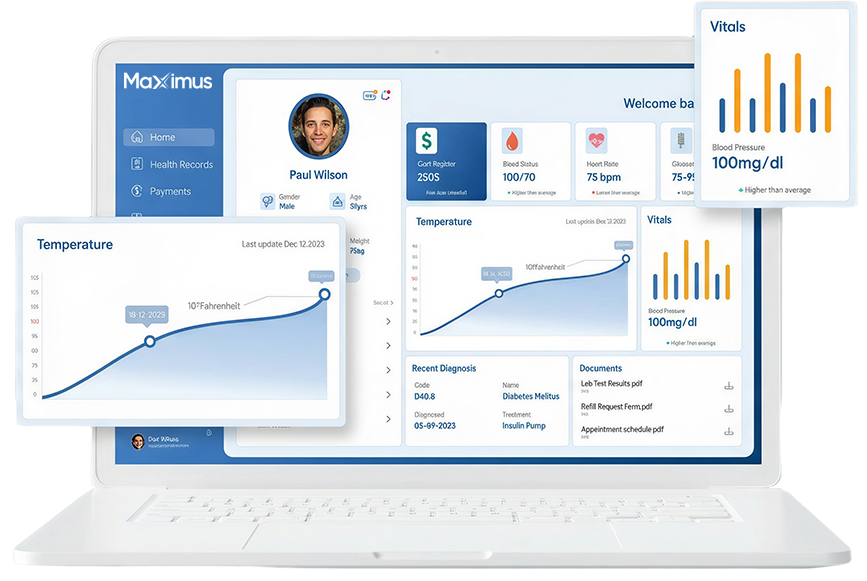
This is exactly the problem Ambient Scribe, part of Maximus Intelligence within Maximus, was built to solve. It listens to the patient-provider conversation in real time and drafts a structured clinical note directly inside the chart, ready for you to review and sign instead of typing from scratch.
Because Maximus was built by a healthcare billing company, the notes it drafts are also shaped with downstream billing and coding accuracy in mind, not just clinical completeness. That matters when documentation quality directly affects claim accuracy and reimbursement, not just chart quality.
This is the practical difference between a system that bends to fit new specialties and one that must be rebuilt to accommodate them.

What This Means for Your Practice

Documentation burden isn’t going away on its own, and neither is the burnout tied to it. The practices making real progress on this aren’t the ones asking physicians to type faster. They’re the ones changing what physicians have to type at all.

If pajama time has become a fixture of your week, it’s worth seeing what an ambient AI scribe actually looks like in a real visit, on your notes, in your specialty.

See Ambient Scribe in action. Book a demo with Maximus and find out how many hours a week you could get back.

Reduce Physician Charting Time

Explore how Maximus Ambient Scribe helps reduce documentation burden, improve note consistency, and support same-day chart completion.

FAQs

What is an AI medical scribe?
An AI medical scribe is a software solution that listens to the conversation between a physician and patient during a visit and automatically generates a structured clinical note. Instead of manually documenting every encounter, physicians review, edit if necessary, and approve the AI-generated draft before it becomes part of the patient’s medical record.
How much time can an AI medical scribe save physicians?
While results vary by specialty and workflow, AI medical scribes can significantly reduce the time spent on documentation by creating the first draft of clinical notes automatically. Many physicians are able to complete chart reviews in just a few minutes instead of spending 10–15 minutes or more writing each note from scratch, helping reduce after-hours charting.
Are AI-generated clinical notes accurate?
Modern AI medical scribes are designed to recognize medical terminology, clinical workflows, and specialty-specific language. However, physicians remain responsible for reviewing, editing, and approving every note before it is finalized, ensuring accuracy and clinical integrity.
Is an AI medical scribe HIPAA compliant?
Reputable AI medical scribe solutions are built with HIPAA-compliant security measures to protect patient information. When evaluating a solution, practices should verify that it offers secure audio processing, encrypted data handling, access controls, and compliance with healthcare privacy regulations.
How does Maximus EHR's Ambient Scribe improve physician workflows?
Maximus EHR’s Ambient Scribe captures patient-provider conversations, generates structured clinical notes directly within the patient’s chart, and streamlines documentation without interrupting the clinical encounter. Because it is integrated into the Maximus EHR platform, it also supports more efficient coding, billing, and same-day chart completion, helping physicians reduce documentation burden and reclaim valuable time.

Table of Contents

Maximus | Electronic Health Record

Transform Your
Practice with
AI-Powered EHR

Reduce administrative burden, streamline workflows, accelerate revenue, and deliver exceptional patient care.