In today’s digital-first healthcare environment, Electronic Health Records (EHRs) are meant to simplify operations and enhance patient care. However, for many providers across the United States, the reality looks quite different. Instead of saving time, EHR systems often introduce layers of complexity that slow clinicians down.
One of the most overlooked consequences of this complexity is click fatigue. It may sound like a minor inconvenience, but over the course of a day, hundreds of extra clicks add up to hours of lost productivity. More importantly, they shift focus away from patients and toward screens.
As healthcare organizations continue to scale and patient volumes increase, designing smarter clinical workflows is no longer optional. Reducing click fatigue has become essential for improving efficiency, minimizing burnout, and delivering better care outcomes.
Click fatigue refers to the mental and physical strain clinicians experience when interacting excessively with EHR systems. It is not just about the number of clicks, but the effort required to navigate through poorly designed workflows.
In many clinical settings, even simple tasks such as reviewing patient history or updating records require navigating through multiple screens. Providers often find themselves repeating the same actions, entering duplicate data, or clicking through unnecessary prompts. Over time, this repetitive interaction creates friction, slows down processes, and increases frustration.
What makes click fatigue particularly challenging is that it often goes unnoticed at the organizational level. While individual clicks may seem insignificant, their cumulative impact on efficiency and provider satisfaction is substantial.
The effects of click fatigue extend far beyond inconvenience. It directly influences how efficiently a healthcare organization operates and how effectively care is delivered.
When clinicians are required to spend excessive time navigating systems, their overall productivity declines. Tasks that should take minutes end up consuming significantly more time, reducing the number of patients that can be seen in a day. This inefficiency can create bottlenecks across the entire workflow, from check-in to checkout.
Another major consequence is provider burnout. Repetitive, non-clinical tasks can be mentally draining, especially when they interfere with meaningful patient interactions. Many providers report spending additional hours after their shifts completing documentation, which further contributes to dissatisfaction and fatigue.
Click fatigue also impacts the quality of patient care. When attention is divided between patients and screens, the patient experience suffers. Reduced face-to-face interaction can affect communication, trust, and overall satisfaction.
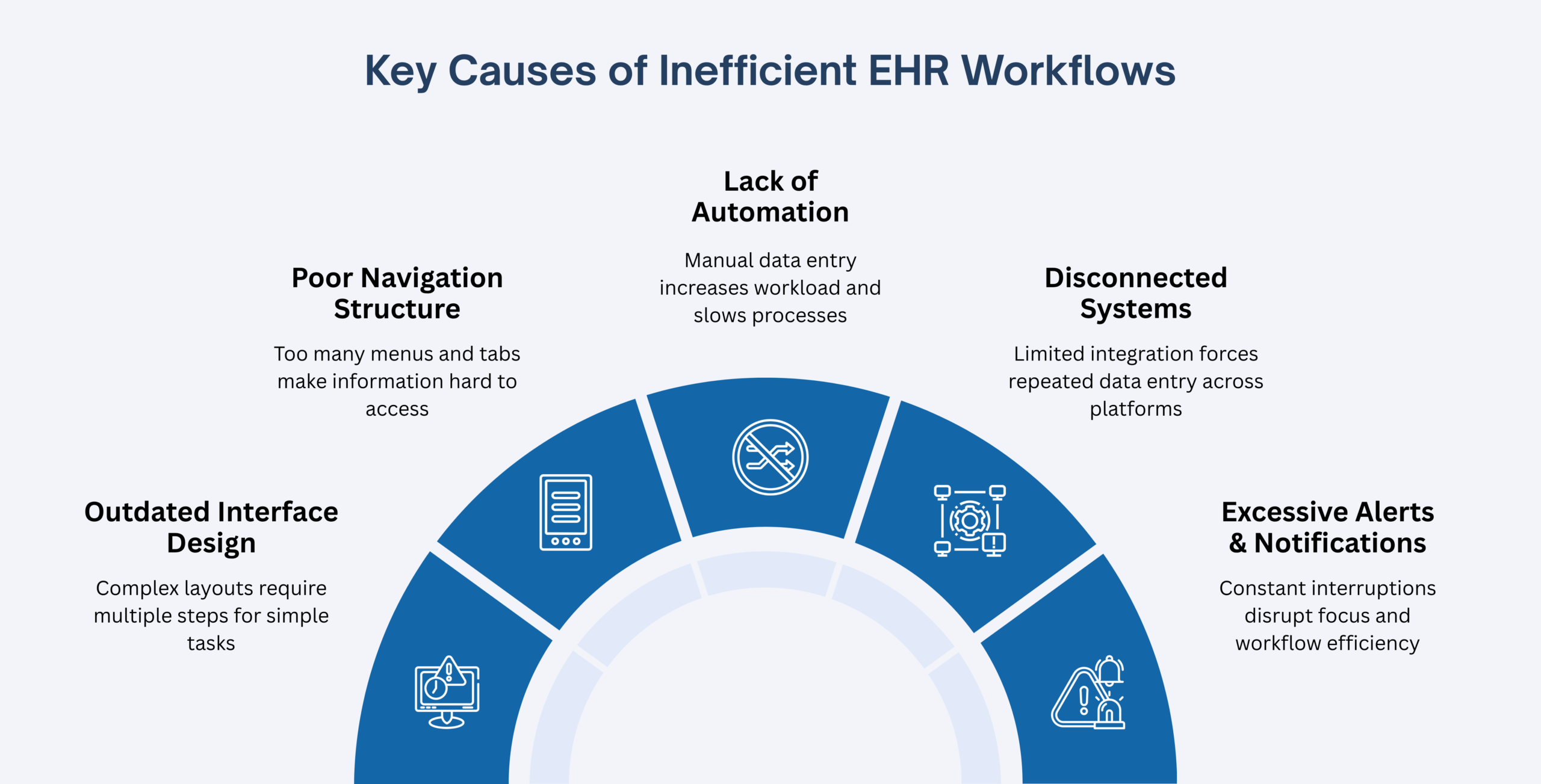
Understanding the root causes of click fatigue is the first step toward solving it. In most cases, the issue lies not with the concept of EHRs but with how they are designed and implemented.
Many systems rely on outdated interface designs that require multiple steps to complete even basic tasks. Instead of presenting information clearly and accessibly, they force users to navigate layers of menus and tabs. This lack of intuitive design significantly increases the number of interactions required.
Another common issue is the lack of automation. Without automated processes, clinicians are required to manually enter data that could otherwise be populated automatically. This not only increases workload but also raises the risk of errors.
Fragmentation across systems further complicates workflows. When EHRs are not well integrated with billing, scheduling, or other practice management tools, providers must switch between platforms and re-enter information multiple times. Additionally, excessive alerts and notifications can disrupt focus, forcing clinicians to pause and respond to system prompts constantly.
Reducing click fatigue requires a thoughtful approach that combines workflow redesign with the right technology. It is not about eliminating clicks, but about ensuring that every interaction is meaningful and efficient.
One of the most effective strategies is simplifying navigation. When systems are designed with intuitive dashboards and consolidated information views, clinicians can access what they need without unnecessary steps. A streamlined interface reduces cognitive load and allows providers to move through tasks more efficiently.
Automation also plays a critical role. By automating repetitive tasks such as data entry and documentation, healthcare organizations can significantly reduce manual effort. Smart templates, auto-fill features, and pre-configured workflows ensure that routine processes are handled seamlessly in the background.
Customization is equally important. No two practices operate in the same way, and EHR systems should reflect that. When workflows can be tailored to specific specialties, roles, and preferences, providers spend less time adapting to the system and more time focusing on patient care.
At the same time, it is essential to manage alerts effectively. Instead of overwhelming users with constant notifications, systems should prioritize critical information and filter out unnecessary interruptions. This helps maintain focus and prevents workflow disruptions.
The evolution of EHR technology has led to the development of smarter systems that prioritize usability and efficiency. Unlike traditional platforms, modern EHR solutions are designed with the end user in mind.
These systems focus on reducing friction at every step of the workflow. They incorporate automation, intelligent data handling, and user-friendly interfaces to minimize the effort required to complete tasks. As a result, clinicians can navigate workflows more smoothly and complete documentation with greater ease.
Traditional vs Smart EHR Systems
By adopting a smart EHR system, healthcare organizations can transform their workflows from reactive and fragmented to proactive and efficient.
Choosing the right EHR system is a critical decision for any healthcare organization. The focus should not only be on functionality but also on how effectively the system supports clinical workflows.
An efficient EHR should offer a high level of customization, allowing practices to design workflows that align with their specific needs. It should also include robust automation capabilities that reduce manual input and streamline repetitive tasks.
Equally important is the user interface. A clean, intuitive design ensures that clinicians can navigate the system with minimal effort. Integration capabilities are another key factor, as seamless connectivity between systems eliminates the need for duplicate work.
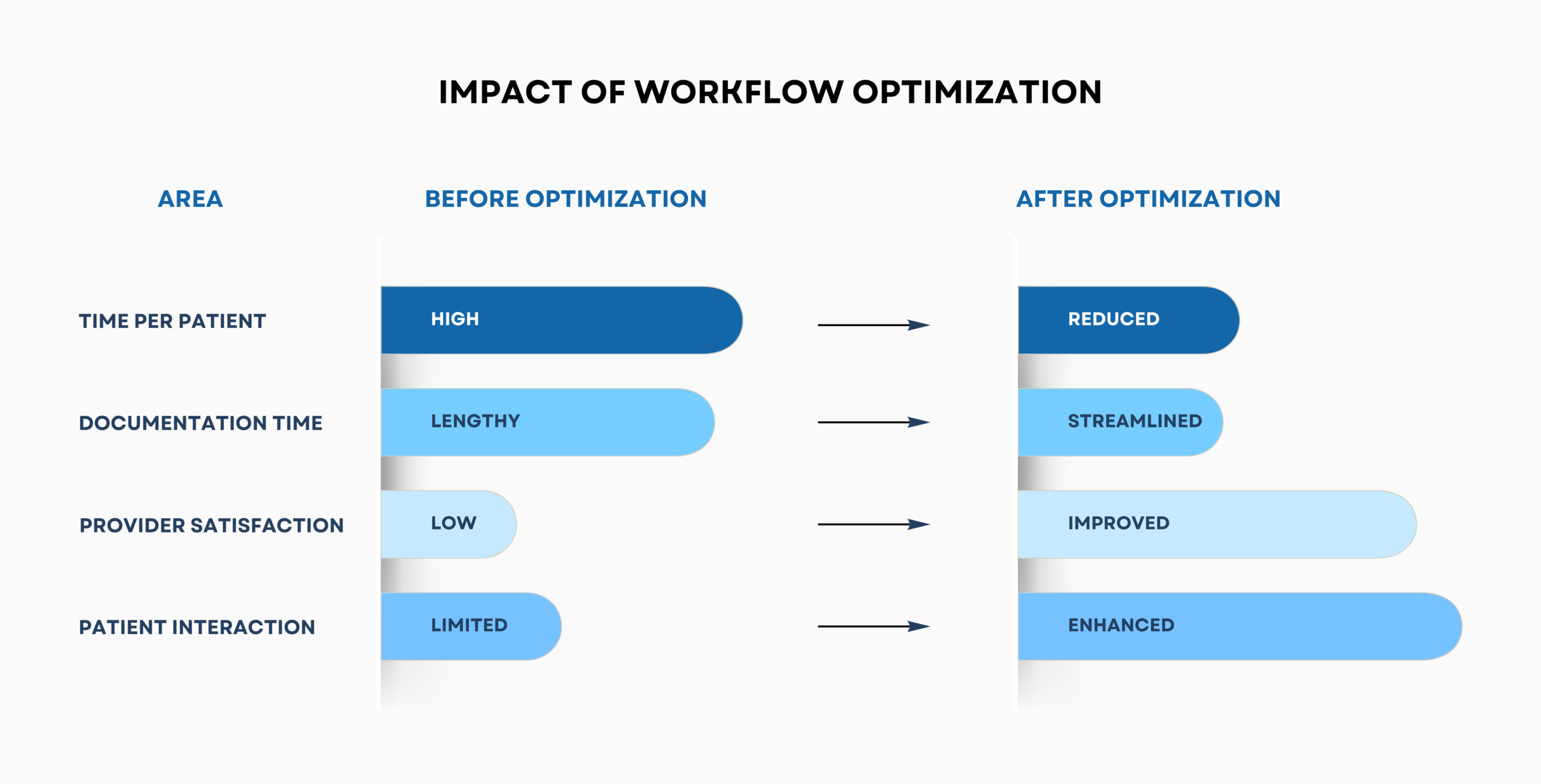
Impact of Workflow Optimization
When these features come together, the result is a system that not only improves efficiency but also enhances the overall experience for both providers and patients.
Instead of forcing clinicians to adapt to rigid systems, Maximus EHR adapts to the way healthcare professionals work. Its customizable workflows ensure that each practice can operate in a way that feels natural and efficient. Automation features reduce the burden of repetitive documentation, while seamless integrations eliminate the need for switching between multiple platforms.
The result is a more streamlined workflow where providers can focus on delivering care rather than navigating systems. Over time, this leads to improved productivity, reduced burnout, and better patient outcomes.
Discover how Maximus EHR can help you reduce click fatigue and optimize your clinical workflows.
Click fatigue is a growing challenge in healthcare, but it is also a solvable one. By rethinking workflow design and adopting smarter technology, healthcare organizations can eliminate unnecessary complexity and improve efficiency across the board.
The goal is not just to reduce clicks, but to create systems that support clinicians rather than slow them down. When workflows are intuitive, automated, and aligned with real-world needs, providers can focus on what truly matters: delivering high-quality patient care.
With solutions like Maximus EHR, the shift toward smarter, more efficient clinical workflows is not just possible, it’s within reach.
Maximus EHR reduces unnecessary clicks with customizable workflows, automation, and intuitive interfaces. Claim your free trial today and optimize clinical efficiency.