In today’s fast-paced healthcare environment, efficiency, accuracy, and patient satisfaction are more important than ever. Healthcare providers, hospitals, and administrators are constantly seeking innovative solutions to streamline operations, reduce errors, and improve patient outcomes. One of the most impactful advancements in modern healthcare is automation.
Automation, when implemented effectively, can transform healthcare practices by optimizing administrative tasks, enhancing clinical workflows, and improving revenue cycle management. Let’s explore how automation is reshaping modern healthcare practices and why your organization should consider leveraging it with solutions like Maximus EHR.
Automation in healthcare involves the use of technology to perform repetitive, time-consuming, or complex tasks with minimal human intervention. These processes range from patient scheduling and medical billing to clinical documentation and lab reporting.
By integrating automation into your healthcare operations, your staff can focus on what matters most: delivering high-quality patient care. Administrators and decision-makers also benefit from reduced operational costs, improved efficiency, and enhanced compliance with regulatory requirements.
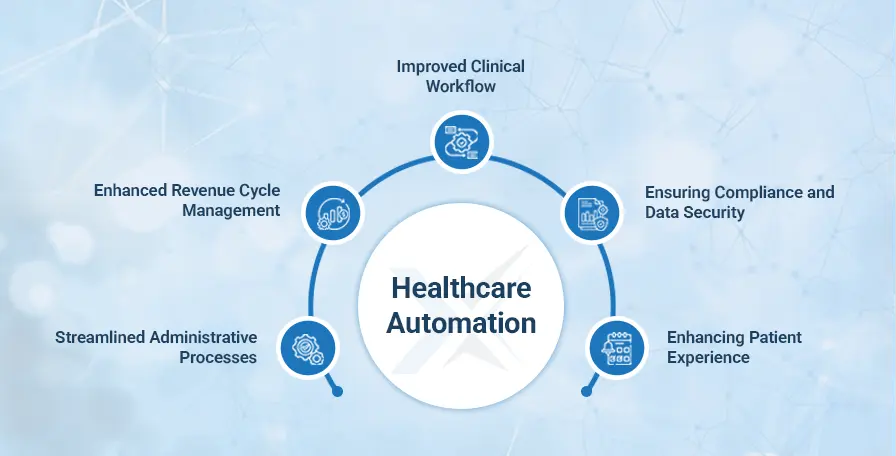
Administrative tasks, such as patient registration, appointment scheduling, and insurance verification, consume a significant portion of staff time. Automating these processes ensures:
For instance, Maximus EHR offers automated patient intake forms and insurance verification tools, freeing your team to focus on patient engagement rather than paperwork.
Explore how Maximus EHR can streamline your hospital’s administrative workflows
Revenue leakage is a common challenge in healthcare practices. Manual billing, coding errors, and delayed claims can result in significant financial losses. Automation can address these issues by:
Healthcare providers can reduce claim errors, accelerate reimbursements, and maximize revenue with Maximus EHR. Automated alerts and dashboards allow administrators to track key financial metrics in real-time.
Clinical staff often spend hours on repetitive documentation tasks, which can lead to burnout and reduced patient interaction time. Automation simplifies these processes by:
This enables clinicians to spend more time with patients, make informed decisions faster, and ensure accurate record-keeping. Maximus EHR offers seamless integration across departments to enhance clinical efficiency and coordination.
Healthcare organizations must adhere to stringent regulations like HIPAA to protect patient data. Automation can assist by:
Patient satisfaction is a key metric for modern healthcare practices. Automation improves the patient journey by:
By minimizing wait times and simplifying interactions, automation leads to a smoother, more convenient patient experience. Your patients benefit from modern, digital-first care with Maximus EHR.
To overcome these challenges, it is crucial to partner with a reliable, scalable solution like Maximus EHR, which provides:
By adopting automation now, your healthcare practice positions itself for long-term success, improved patient outcomes, and higher operational efficiency.
Automation is no longer an optional enhancement; it is a necessity for modern healthcare practices. From streamlining administrative processes to enhancing clinical workflows, revenue cycle management, and patient satisfaction, automation offers tangible benefits for healthcare providers, hospitals, and administrators.
Maximus EHR empowers healthcare organizations to embrace automation seamlessly, reduce operational inefficiencies, and focus on what truly matters – delivering exceptional patient care.
Experience a modern, automation-powered EHR designed to reduce errors, boost efficiency, and enhance patient outcomes.