The Role of EHRs in Population Health Management

The Role of EHRs in Population Health Management
The healthcare system in the United States is evolving. The traditional approach, addressing patients upon their arrival, is being superseded by a strategy that is more proactive, data-oriented, and ultimately more successful. This transition is referred to as Population Health Management (PHM), with the Electronic Health Record (EHR) being at its core.

The U.S. population health management solutions market, estimated at $22.45 billion in 2025, is expected to grow to $78.36 billion by 2034, signifying a transformation rather than just a trend. For healthcare providers aiming to remain at the forefront, grasping how EHRs drive PHM is essential.
What Is Population Health Management?

Population Health Management (PHM) is the process of analyzing patient health data across defined groups to improve clinical outcomes, reduce costs, and identify care gaps before they become crises. It focuses not on individual patients in isolation but on trends across communities, demographics, and groups of chronic conditions.
PHM programs analyze data from multiple sources: clinical records, insurance claims, pharmacy data, labs, and even social determinants of health (SDoH) – factors like housing, income, and access to care that significantly affect health outcomes.
For PHM to work, providers need a unified, centralized, and intelligent data system. That is where the EHR comes in.
Why EHRs Are Central to PHM

Why EHRs Are Central to PHM

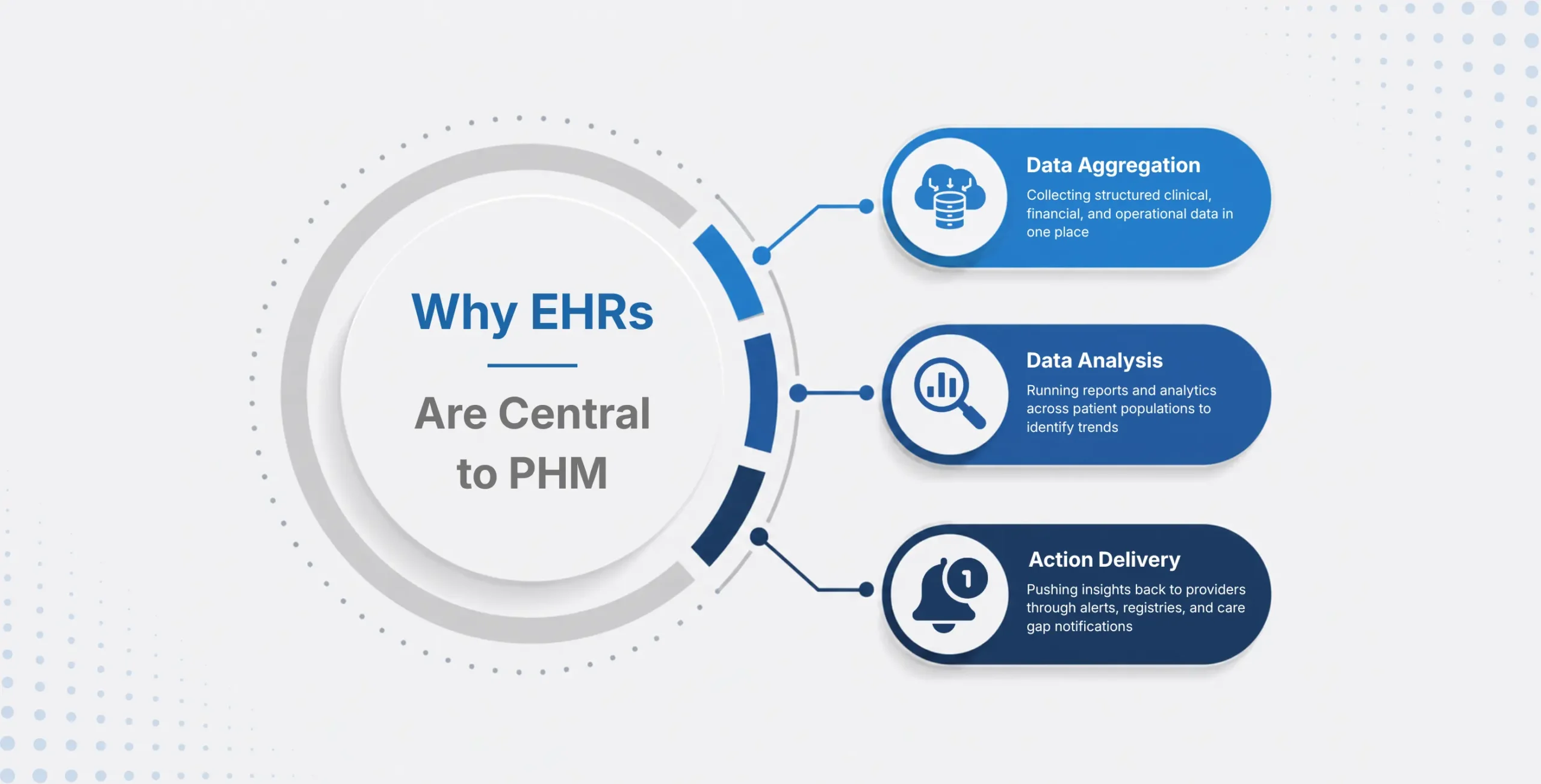
The EHR is not just a digital chart. It is the primary data infrastructure of a modern healthcare practice. For PHM, the EHR serves three core functions:
  • Data aggregation: Collecting structured clinical, financial, and operational data in one place
  • Data analysis: Running reports and analytics across patient populations to identify trends
  • Action delivery: Pushing insights back to providers through alerts, registries, and care gap notifications
A systematic review published in PMC identified 147 facilitators versus 85 barriers to using EHRs for public health, with top benefits including increased productivity, higher data quality, and more efficient patient data access. The evidence is clear: EHRs, when properly implemented, are net positives for population-level care.

Key EHR Features That Drive Population Health

Not all EHRs are built equal when it comes to PHM support. Here are the features that matter most:
EHR Feature PHM Function Impact
Risk Stratification Tools
Identify high-risk patients
Proactive intervention before hospitalization
Care Gap Detection
Flag missed screenings or follow-ups
Improved preventive care rates
Clinical Decision Support
Real-time alerts and evidence-based prompts
Safer, more consistent clinical decisions
Patient Registries
Segment patients by condition or risk level
Targeted outreach and disease management
Interoperability (FHIR)
Share data across providers and systems
Coordinated, continuity-focused care
Advanced Analytics & Reporting
Track outcomes across populations
Data-driven quality improvement
Patient Portal & Engagement Tools
Communicate reminders and results to patients
Higher treatment adherence and satisfaction

EHR Data in Action: Real-World PHM Use Cases

Here is how EHR data translates into real population health outcomes across common clinical scenarios:

Chronic Disease Management

Conditions like diabetes, hypertension, and COPD are among the costliest and most preventable drivers of healthcare spending. EHRs enable providers to build patient registries for these populations, set automated reminders for A1C checks or blood pressure monitoring, and track adherence to treatment plans, all from a single dashboard.

Disease Surveillance

EHRs have proven valuable for real-time disease surveillance. Programs like DiSTRIBuTE (Distributed Surveillance Taskforce for Real-time Influenza Burden Tracking and Evaluation) use aggregated EHR data to track weekly disease trends more accurately and timely than traditional manual reporting systems.

Preventive Care Programs

By segmenting patient populations by age, diagnosis, or risk score, EHRs allow practices to launch targeted preventive care campaigns, flu vaccination outreach, cancer screening reminders, or annual wellness visit nudges, reducing preventable hospitalizations at scale.

Value-Based Care Performance

As the healthcare industry moves toward value-based care contracts, EHRs serve as the tracking backbone. Providers can monitor quality metrics, track care gap closure rates, and demonstrate measurable improvements to payers — directly tying clinical performance to financial outcomes.

Benefits of EHR-Driven Population Health Management

The measurable benefits of combining EHR data with PHM strategies are significant:
Benefit Evidence / Outcome
Reduced hospital readmissions
Organizations report up to 63% reduction with PHM platforms
Lower per-capita medical expenses
Up to 18% decrease in per-capita costs reported
Improved preventive care rates
Automated reminders close care gaps at scale
Enhanced care coordination
FHIR-enabled data sharing reduces duplicate tests and fragmented care
Better chronic disease control
Risk stratification enables targeted intervention for high-risk patients
Stronger value-based care performance
Real-time analytics support quality reporting and contract compliance

Challenges and How Modern EHRs Address Them

PHM through EHRs is not without challenges. The same systematic review that identified facilitators also noted significant barriers:
Modern EHRs address these issues through FHIR-based interoperability standards, AI-powered data validation, intuitive clinical decision support tools, and seamless integrations with labs, pharmacies, and health information exchanges (HIEs). The emphasis in 2026 is on adaptive, intelligent health platforms that don’t just store data; they activate it.
How Maximus EHR Supports Population Health Goals

How Maximus EHR Supports Population Health Goals

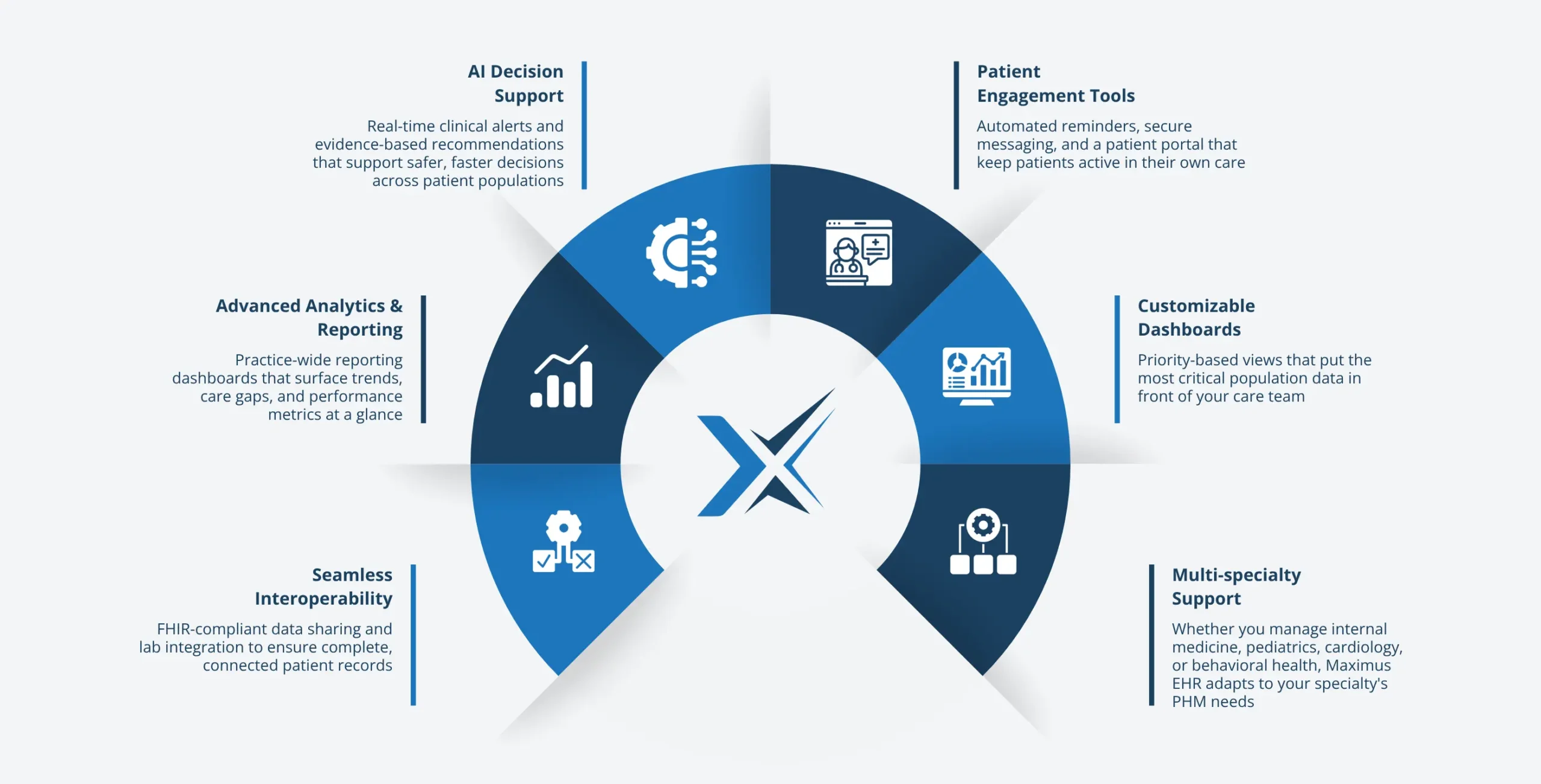
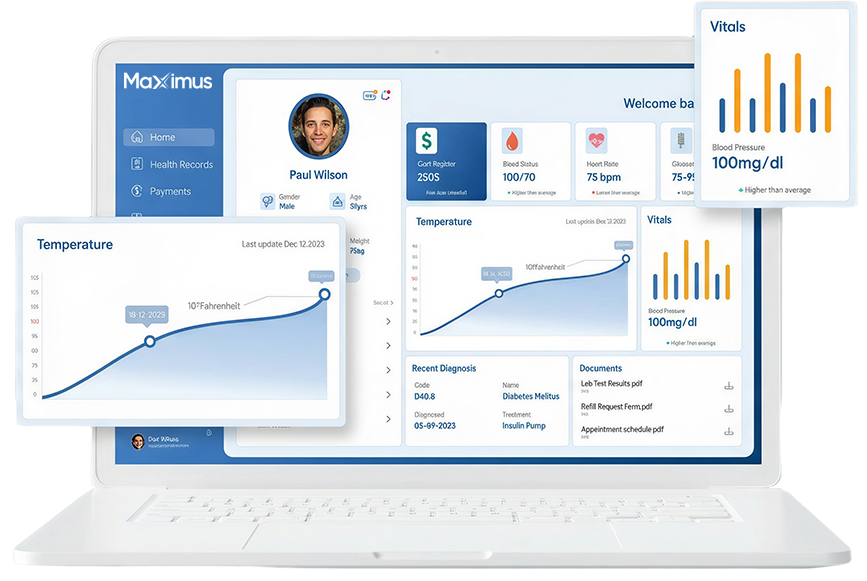
Maximus EHR is built with the demands of modern healthcare in mind. For practices pursuing population health goals, Maximus delivers:
Maximus EHR is not just a documentation tool. It is a population health engine built for practices that want to deliver better care, reduce unnecessary costs, and perform in value-based care environments.

Conclusion

Population health management is the future of healthcare delivery, and EHRs are the infrastructure that makes it possible. From risk stratification and chronic disease management to disease surveillance and value-based care reporting, the EHR sits at the center of every effective PHM strategy.
The practices that will thrive in the next decade are not those that wait for patients to come to them. They are the ones using their EHR data to find the right patients, close the right care gaps, and deliver the right interventions, before a condition becomes a crisis.
Maximus EHR gives your practice the tools to do exactly that. Smart, simple, and built for the demands of modern healthcare.

Ready to see how Maximus EHR can support your population health goals?

See how Maximus EHR helps your practice identify care gaps, improve preventive care, manage high-risk patients, and support population health goals with advanced analytics and AI-powered decision support.

FAQs

What is the role of an EHR in population health management?

An Electronic Health Record (EHR) serves as the foundation of population health management by collecting, organizing, and analyzing patient data across entire populations. It helps providers identify high-risk patients, monitor chronic conditions, close care gaps, and improve overall health outcomes through data-driven decision-making.

How do EHRs help improve patient outcomes?
EHRs improve patient outcomes by providing real-time access to complete patient records, automated clinical alerts, preventive care reminders, and evidence-based decision support. These features enable providers to intervene earlier, coordinate care more effectively, and reduce preventable complications and hospitalizations.
What EHR features are most important for population health management?
Key EHR features for population health management include risk stratification, patient registries, care gap detection, clinical decision support, interoperability (FHIR), advanced analytics and reporting, and patient engagement tools such as portals and automated reminders.
Why is interoperability important for population health management?
Interoperability allows healthcare providers, laboratories, pharmacies, and other care organizations to securely exchange patient information. This creates a more complete view of each patient’s health, reduces duplicate testing, improves care coordination, and supports better population-level health management.
How does Maximus EHR support population health initiatives?
Maximus EHR supports population health by combining AI-powered clinical decision support, advanced reporting and analytics, FHIR-compliant interoperability, customizable dashboards, patient engagement tools, and multi-specialty workflows. These capabilities help healthcare organizations identify care gaps, improve preventive care, and succeed in value-based care programs.

Table of Contents

Maximus | Electronic Health Record

Transform Your
Practice with
AI-Powered EHR

Reduce administrative burden, streamline workflows, accelerate revenue, and deliver exceptional patient care.