Why Interoperability Matters More Than Ever in Value-Based Care

Why Interoperability Matters More Than Ever in Value-Based Care

Table of Contents

Introduction

The US healthcare system is rapidly evolving as providers transition from traditional fee-for-service models to value-based care. This shift prioritizes patient outcomes, cost efficiency, and quality of care, placing data at the center of every decision.
However, data alone is not enough. For value-based care to succeed, healthcare systems must communicate seamlessly. This is where interoperability in healthcare becomes essential.
Interoperability ensures that patient data flows seamlessly across systems, providers, and organizations. For healthcare providers, administrators, and decision-makers, it is now a strategic requirement rather than a technical upgrade.

What Is Interoperability in Healthcare?

Interoperability refers to the ability of different healthcare systems and applications to exchange, interpret, and use data effectively. It ensures that patient information is accessible wherever and whenever it is needed.
There are three primary levels of interoperability:
At its highest level, interoperability enables a complete and accurate view of the patient, which is critical for delivering coordinated and high-quality care.

The Shift Toward Value-Based Care in the US

Value-based care is transforming how healthcare providers deliver and are reimbursed for services. Instead of focusing on the volume of services, it emphasizes patient outcomes and efficiency.
This model requires continuous access to accurate and comprehensive patient data. Without healthcare data interoperability, providers struggle to coordinate care and measure performance effectively.
Key elements of value-based care include:
In this environment, disconnected systems can lead to inefficiencies, gaps in care, and missed opportunities for improvement.
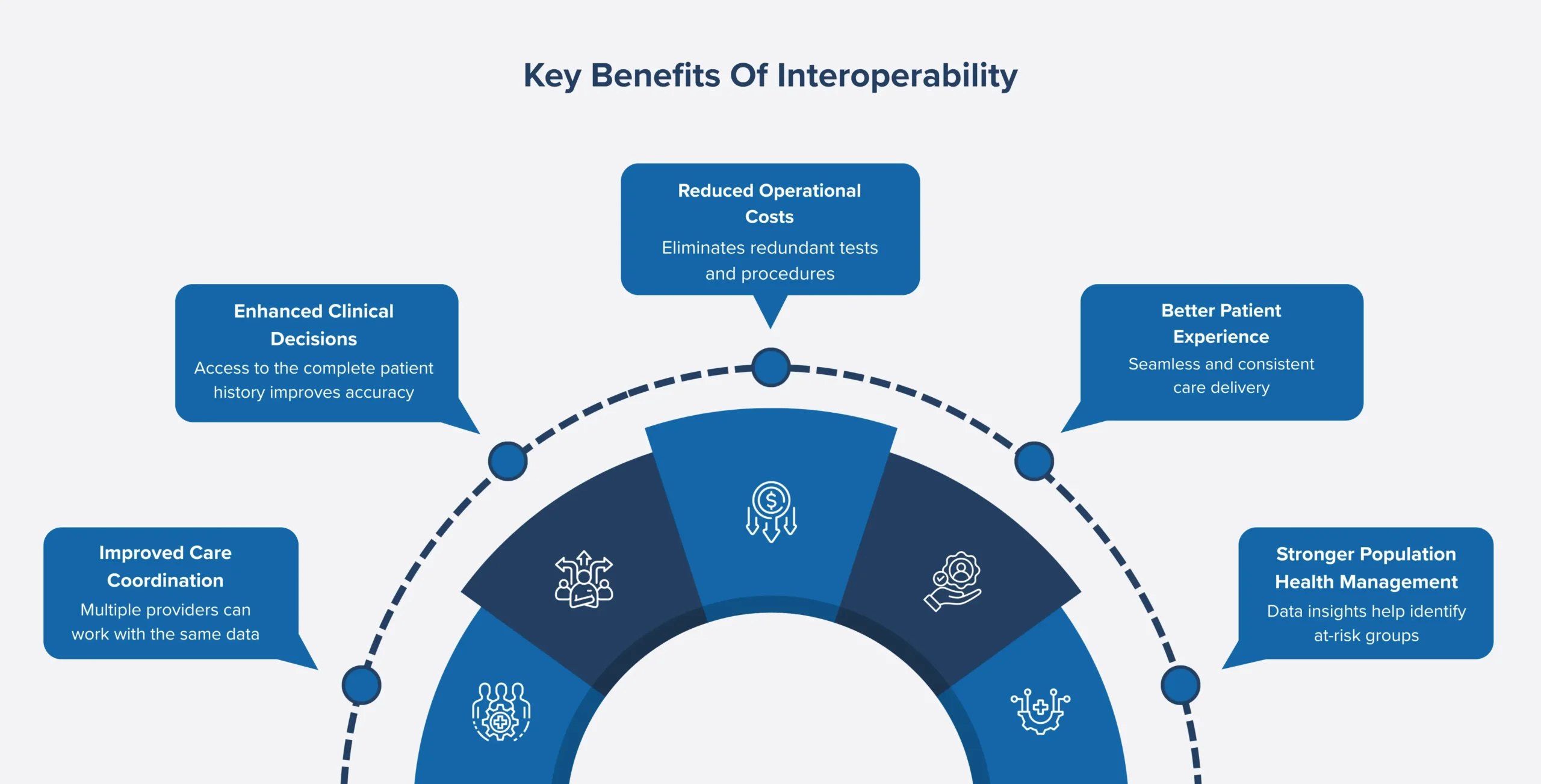
Key benefits of interoperability

Why Interoperability Matters More Than Ever

As healthcare systems grow more complex, interoperability plays a critical role in ensuring smooth operations and better patient outcomes.
Interoperability enables providers to access complete patient information in real time. This reduces duplication, minimizes errors, and supports faster, more informed decision-making. It also enhances collaboration across care teams, which is essential in value-based care models.
Key benefits of interoperability:
In today’s healthcare environment, interoperability is not just beneficial; it is foundational to success.

Key Challenges in Achieving Interoperability

Despite its importance, achieving interoperability remains a challenge for many healthcare organizations. These challenges often stem from both technological and organizational barriers.

Legacy systems, inconsistent data standards, and security concerns can all hinder effective data exchange. Additionally, the cost of upgrading infrastructure can delay adoption.

Interoperability Challenges and Their Impact
Challenge Description Impact on Care Delivery
Data Silos
Isolated systems that don’t communicate
Incomplete patient information
Lack of Standards
Inconsistent data formats
Inefficient data exchange
Legacy Systems
Outdated technology
Limited integration capabilities
Security Concerns
Data privacy and compliance risks
Hesitation in sharing data
High Implementation Cost
Investment in new systems and training
Slower adoption of interoperability
Addressing these challenges requires a combination of modern technology, standardized protocols, and strategic planning.

How Interoperability Improves Patient Outcomes

Interoperability directly impacts the quality of care patients receive. When providers have access to accurate and complete data, they can make better clinical decisions and deliver more personalized care.
For instance, in chronic disease management, patients often see multiple specialists. Without interoperable systems, each provider may only have partial information. With interoperability, all providers can access the same comprehensive data, resulting in coordinated and consistent treatment.
Interoperability also supports early intervention by enabling predictive analytics. Providers can identify potential risks and take proactive steps, improving long-term outcomes and reducing hospital readmissions.

The Role of EHR Systems in Enabling Interoperability

Electronic Health Records (EHRs) are central to achieving interoperability. However, the effectiveness of interoperability largely depends on the capabilities of the EHR system in use.
Modern EHR systems are designed to integrate seamlessly with other healthcare technologies, enabling real-time data exchange and supporting value-based care initiatives.
Key capabilities of interoperable EHR systems:

Solutions like Maximus EHR are built with these capabilities in mind. By enabling seamless data exchange and eliminating silos, Maximus EHR empowers healthcare organizations to deliver connected, efficient, and high-quality care.

Regulatory Drivers in the US Healthcare System

Interoperability is increasingly being driven by regulatory requirements in the United States. These regulations aim to improve transparency, patient access to data, and overall healthcare efficiency.
Healthcare organizations must align with these regulations to remain compliant and competitive.

Key US Interoperability Regulations

Regulation Objective Impact on Providers
21st Century Cures Act
Prevent information blocking
Encourages open data sharing
CMS Interoperability Rule
Improve patient access to health data
Enhances transparency and engagement
ONC Interoperability Standards
Promote standardized data exchange
Supports system integration
These regulations reinforce the importance of adopting interoperable systems and modern healthcare technologies.
How to Improve Interoperability in Your Organization

How to Improve Interoperability in Your Organization

Improving interoperability requires a strategic and phased approach. It involves not only upgrading technology but also aligning processes and training staff.
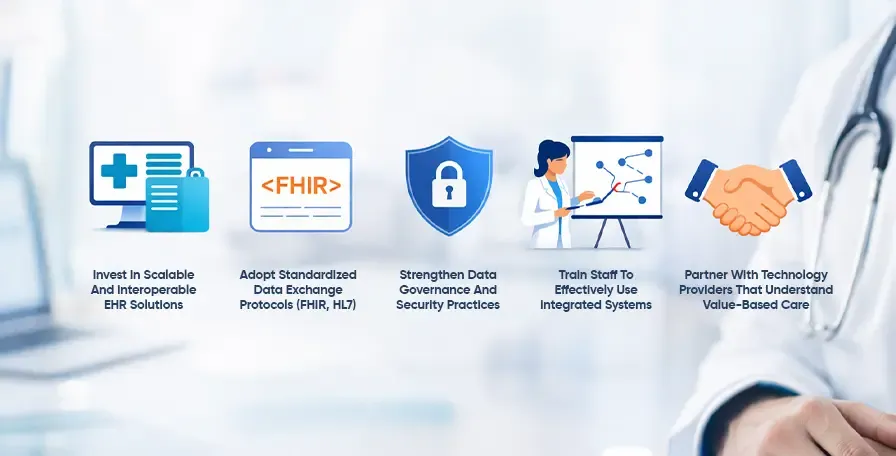
Healthcare organizations should start by evaluating their current systems and identifying gaps in data exchange capabilities. Investing in modern, interoperable EHR systems is a critical step.
Practical steps to enhance interoperability:
Organizations that take these steps will be better equipped to navigate the complexities of modern healthcare and succeed in value-based care environments.

Conclusion

As the shift toward value-based care accelerates, interoperability has become a cornerstone of modern healthcare delivery. It enables seamless data exchange, improves patient outcomes, and reduces operational inefficiencies.
For healthcare providers, administrators, and decision-makers, investing in interoperability is no longer optional; it is essential for long-term success.

Solutions like Maximus EHR provide the tools needed to achieve true interoperability. By connecting systems, streamlining workflows, and supporting compliance, Maximus EHR helps organizations transition from fragmented care to a fully integrated, value-driven model.

Unlock Seamless Data Exchange with Maximus EHR

Maximus EHR enables real-time interoperability, helping you improve care coordination, reduce costs, and succeed in value-based care. Start your free trial today.

FAQs

Why is interoperability important in value-based care?
It allows providers to share and access patient data, improving care coordination and outcomes while reducing costs.
What are the main challenges of interoperability?
Common challenges include data silos, lack of standardization, legacy systems, and security concerns.
How does interoperability improve patient care?
It provides complete patient information, enabling better diagnosis, treatment, and coordination among providers.
What role do EHR systems play in interoperability?
EHR systems act as the foundation for data exchange, integration, and analytics in healthcare.
How can organizations achieve interoperability?
By adopting modern EHR systems, using standardized protocols, and implementing strong data governance practices.