Why One-Size-Fits-All EHRs Fail Specialty Practices

Why One Size Fits All EHRs Fail Specialty Practices

Table of Contents

Healthcare technology is meant to simplify clinical workflows, improve patient care, and help practices operate more efficiently. However, many healthcare organizations still rely on generic electronic health record systems that attempt to serve every medical specialty with the same structure. While these systems may work reasonably well for general practices, they often fall short when used in specialty clinics.
Specialty providers operate in highly specific clinical environments. A cardiology clinic, for example, manages vastly different workflows, documentation needs, and diagnostic data compared to a dermatology or orthopedic practice. When a single EHR system tries to accommodate all specialties equally, it usually fails to meet the unique requirements of each one.

This is why many healthcare leaders are shifting their focus toward specialty-specific EHR systems that offer customization, workflow flexibility, and better integration with specialty tools.
In this blog, we will explore why one-size-fits-all EHR systems fail specialty practices, the challenges they create, and what healthcare decision-makers should look for when choosing the right EHR platform.

What Is a One-Size-Fits-All EHR?

A one-size-fits-all EHR is a generic electronic health record system designed to serve a wide range of healthcare providers using the same structure, templates, and workflows. These systems typically focus on broad functionality rather than specialty-specific customization.
While this approach may seem convenient at first, it often forces providers to adapt their workflows to fit the software instead of allowing the system to support their clinical processes.
For specialty practices, this limitation quickly becomes a major operational challenge. Specialists rely on unique diagnostic procedures, documentation standards, and clinical pathways that generic EHR systems are rarely built to accommodate effectively.
As a result, healthcare providers often spend more time navigating the system than focusing on patient care.
Why Generic EHR Systems Struggle in Specialty Practices

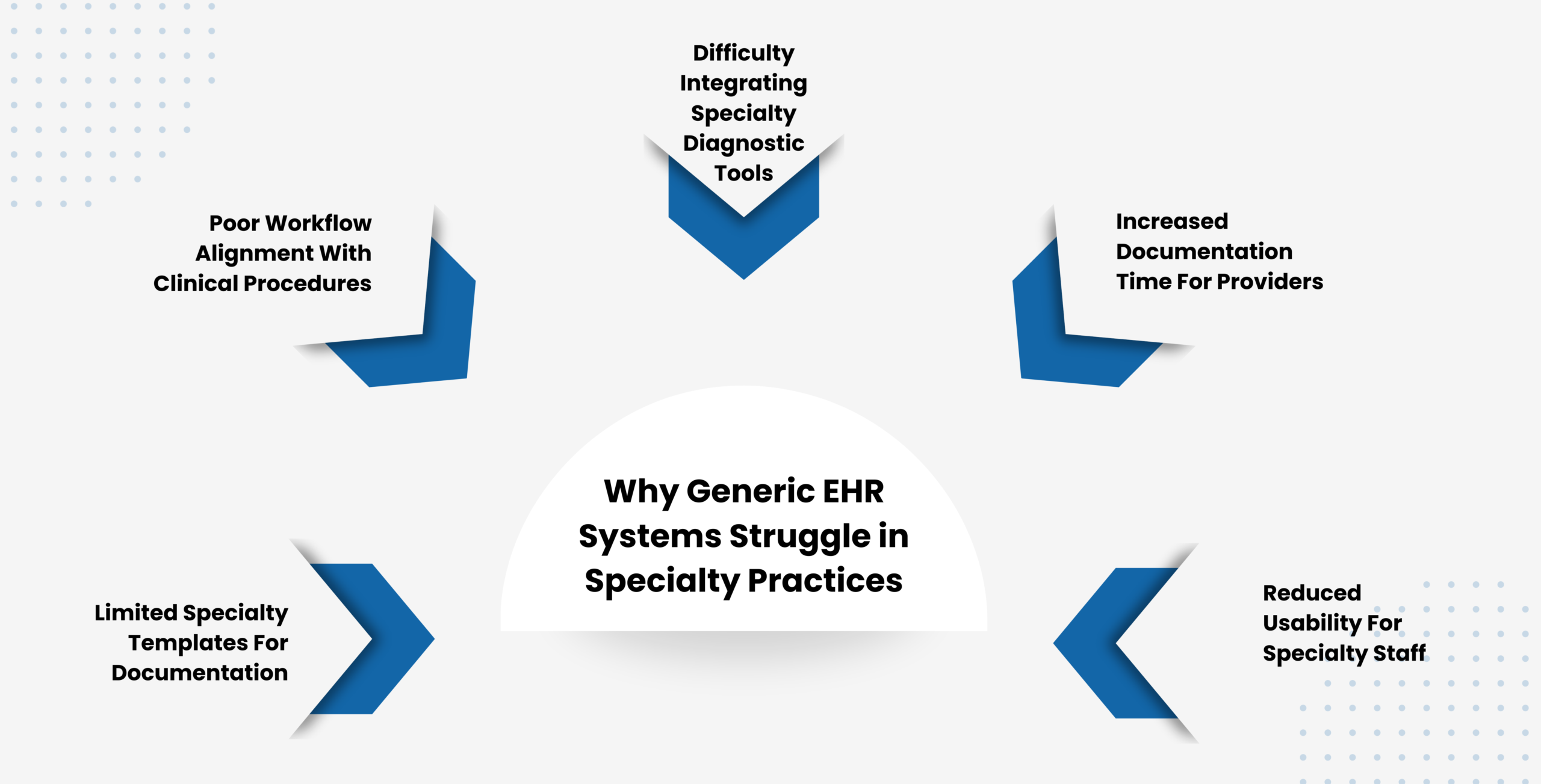
Why Generic EHR Systems Struggle in Specialty Practices

Generic EHR platforms are typically designed with standard clinical workflows in mind. However, specialty practices often operate outside these standardized frameworks.
When a system lacks specialty-specific functionality, clinics are forced to create workarounds that reduce efficiency and increase administrative burden.

Some of the most common challenges include:

For example, an ophthalmology practice may need detailed visual field data and imaging integration, while a gastroenterology clinic may rely heavily on procedure documentation and endoscopy reporting. A generic EHR rarely accommodates these needs without significant customization.
Over time, these limitations can lead to workflow disruptions, reduced productivity, and provider frustration.

The Operational Impact of Using the Wrong EHR

The consequences of using a generic EHR extend beyond simple inconvenience. In many cases, the wrong EHR system can negatively affect both clinical outcomes and financial performance.

When workflows are not optimized for a specialty environment, practices may experience several operational challenges.

Common impacts include:
For healthcare administrators and decision-makers, these inefficiencies often translate into lost revenue opportunities and decreased practice performance.
Over time, the hidden costs of an incompatible EHR system can become substantial.

Generic EHR vs Specialty EHR: Key Differences

Understanding the differences between generic and specialty-focused EHR systems helps healthcare leaders make better technology decisions.
Feature Generic EHR Specialty EHR
Workflow Design
Standardized workflows
Specialty-specific workflows
Documentation Templates
Basic templates
Specialty-focused templates
Integrations
Limited specialty integrations
Designed for specialty tools
Customization
Limited flexibility
Highly customizable
Clinical Efficiency
Often slower
Optimized for specialty care
Specialty EHR systems are built with the specific needs of different medical disciplines in mind. Instead of forcing providers to adapt their processes, these systems support the natural flow of clinical care.
This difference can significantly improve both efficiency and user satisfaction.
Essential Features Specialty Clinics Need in an EHR

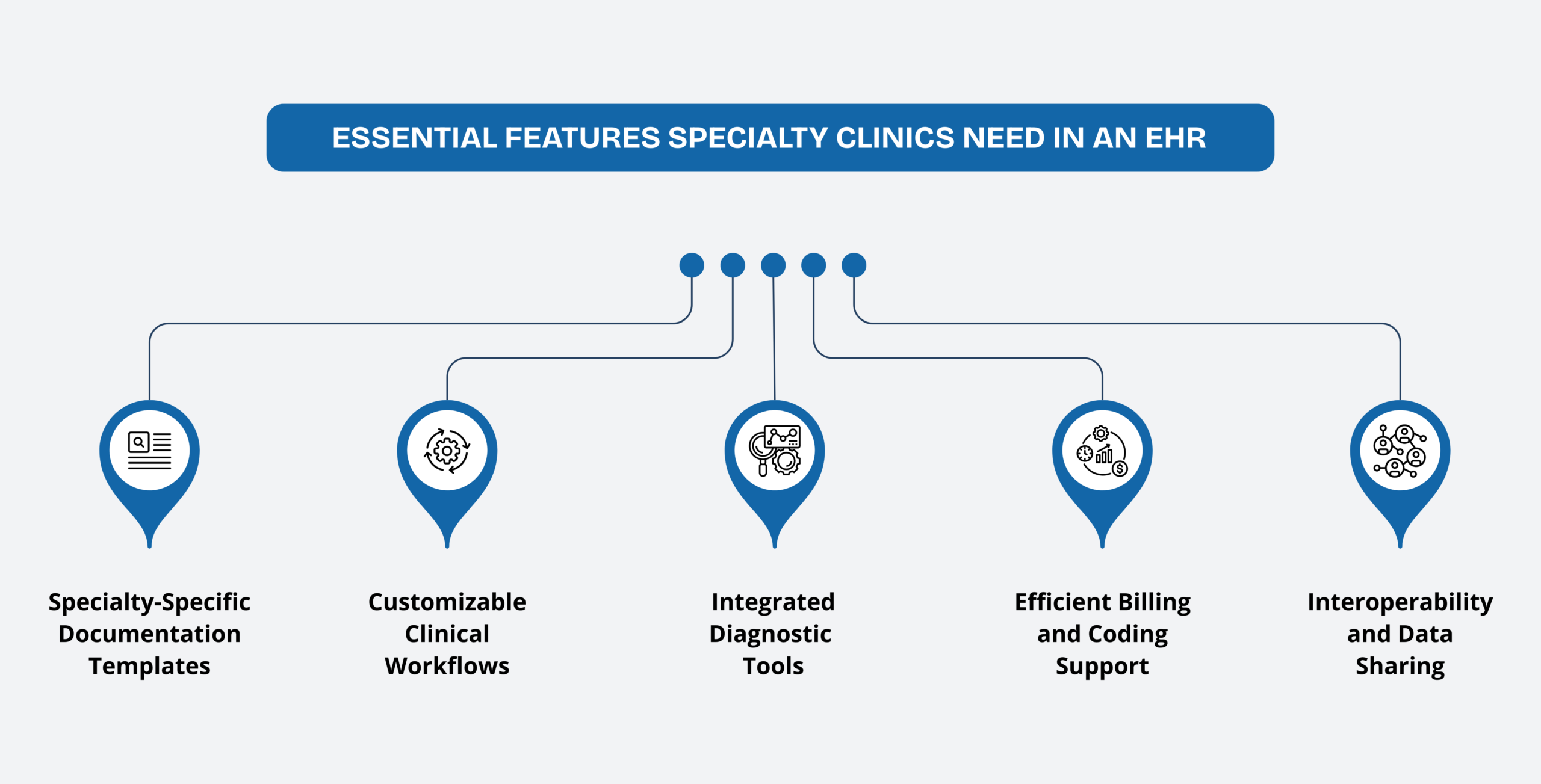
Essential Features Specialty Clinics Need in an EHR

When evaluating EHR systems, specialty clinics should prioritize platforms that offer flexibility, customization, and specialty-specific functionality. The most effective EHR systems typically include the following capabilities:

How Specialty-Focused EHRs Improve Efficiency and Care

Specialty EHR systems are designed to reduce administrative burden and streamline clinical processes. When clinics adopt an EHR platform tailored to their specialty needs, they often experience improvements in several key areas.
These benefits may include:
In addition to operational improvements, specialty-focused EHR systems also contribute to better patient outcomes. When providers spend less time navigating software and more time interacting with patients, the quality of care naturally improves. For many specialty clinics, upgrading to a flexible EHR platform becomes an important step toward long-term growth and sustainability.

Choosing the Right EHR for Your Specialty Practice

Selecting the right EHR system requires careful evaluation of both technical features and operational requirements. Healthcare decision-makers should consider several factors before implementing a new platform.
Evaluation Factor Why It Matters
Workflow flexibility
Ensures the system supports specialty processes
Customization capabilities
Allows clinics to adapt the platform to their needs
Integration support
Enables connection with specialty tools and labs
Usability
Reduces training time and improves staff adoption
Scalability
Supports practice growth and future needs
A well-designed EHR system should not only meet current operational requirements but also adapt as the practice grows and evolves. Taking the time to evaluate these factors can help clinics avoid costly technology decisions and ensure long-term success.

How Maximus EHR Supports Specialty Clinics

As healthcare organizations continue to evolve, the demand for flexible and customizable EHR solutions is growing rapidly. Specialty practices need systems that understand their workflows, documentation needs, and operational challenges.

Maximus EHR is designed with these requirements in mind.

Rather than forcing clinics to adjust to rigid software structures, Maximus EHR provides a platform that adapts to the unique needs of specialty providers. With customizable workflows, specialty-focused templates, and powerful interoperability capabilities, the system helps practices streamline operations and improve care delivery.

By reducing administrative complexity and supporting specialty-specific processes, Maximus EHR enables providers to focus on delivering high-quality patient care.

For healthcare leaders looking to modernize their technology infrastructure, adopting a flexible EHR platform like Maximus EHR can be a significant step toward greater efficiency, improved provider satisfaction, and better patient outcomes.

Stop Letting the Wrong EHR Slow Your Practice Down

Maximus EHR is built for specialty clinics with customizable workflows, advanced integrations, and specialty-specific templates. Book your free demo today and experience a smarter way to manage your practice.

FAQs

Why do generic EHR systems struggle in specialty practices?
Generic EHR systems are designed to support a wide range of healthcare providers using standardized workflows and templates. However, specialty practices often require specific documentation, diagnostic integrations, and treatment workflows. When these needs are not supported, providers are forced to create workarounds, which can reduce efficiency and increase administrative workload.
What is a specialty-specific EHR system?
A specialty-specific EHR system is designed to support the unique clinical workflows, documentation requirements, and tools used by particular medical specialties. These systems often include customized templates, specialty-focused integrations, and flexible workflows that help providers manage patient care more efficiently.
What are the main benefits of using a specialty-focused EHR?
Specialty-focused EHR systems help clinics operate more efficiently by supporting their specific clinical processes. Key benefits often include faster documentation, improved workflow efficiency, better integration with specialty equipment, reduced administrative burden, and more accurate billing and coding.
How does the wrong EHR impact specialty clinic productivity?
When an EHR system does not align with a clinic’s workflow, providers may spend more time navigating the software instead of treating patients. This can lead to longer patient visits, increased documentation time, staff frustration, and reduced patient throughput, ultimately affecting the overall productivity of the practice.
How can Maximus EHR support specialty practices?
Maximus EHR is designed to adapt to the needs of specialty clinics by offering customizable workflows, specialty-specific templates, and strong interoperability capabilities. These features help healthcare providers streamline documentation, improve operational efficiency, and focus more on delivering high-quality patient care.