Why Practices Switch to Maximus EHR: Common Pain Points We Solve

Why Practices Switch to Maximus EHR

Introduction: The Real Cost of Staying Put

Switching EHR systems feels risky. Nobody wants to disrupt a functioning clinic, retrain staff, or touch patient data unnecessarily. That hesitation is fair, and it’s exactly why so many practices stay with software they’ve outgrown.

But “functioning” and “working well” are not the same thing. Every extra click, every delayed support ticket, and every surprise invoice is a cost, even if it never shows up as a line item. Physician burnout, staff turnover, and slower reimbursements are the real price of staying loyal to a broken system.

Maximus EHR was built for practices tired of fighting their own software. It’s not another bloated legacy platform with a new coat of paint. It’s a modern, billing-aware EHR designed around how clinicians actually work, not how a decades-old codebase happens to be structured.

The Reality of Switching

Here’s a direct, no-spin comparison of what practices typically experience with legacy systems versus what changes on Maximus EHR.
Metric Legacy / Frustrating EHR Systems The Maximus EHR Solution
Charting Speed
5-10+ clicks and multiple screens per note
Single-screen, intuitive workflows built for speed
User Interface / Clicks
Dense, dated menus that bury common tasks
Modern, streamlined design with fewer clicks to chart
Customer Support Response
Ticket queues, days or weeks for a fix
Dedicated support team with rapid response times
Hidden Fees
Add-on charges for e-prescribing, labs, portals
Transparent, all-inclusive pricing across the platform
Mobile Access
Desktop-only, chained to the clinic workstation
Full charting on mobile and tablet, anywhere

Pain Point 1: The “Click Fatigue” and Bloated Interfaces

Legacy EHRs were built layer by layer over 15 or 20 years. Every new feature got bolted onto the same aging interface, and the result is a maze: sub-menus inside sub-menus just to document a routine visit.
Clinicians feel this every single day:
This isn’t a minor annoyance. It’s a direct driver of clinician burnout, and it slows down the entire care team.

How Maximus Solves It

Maximus EHR is built around single-screen, specialty-aware workflows. Charting fields, orders, and coding support live where the clinician is already looking, not three menus away. Less hunting, less clicking, more time for actual patient care.
The Black Hole of Customer Support

Pain Point 2: The Black Hole of Customer Support

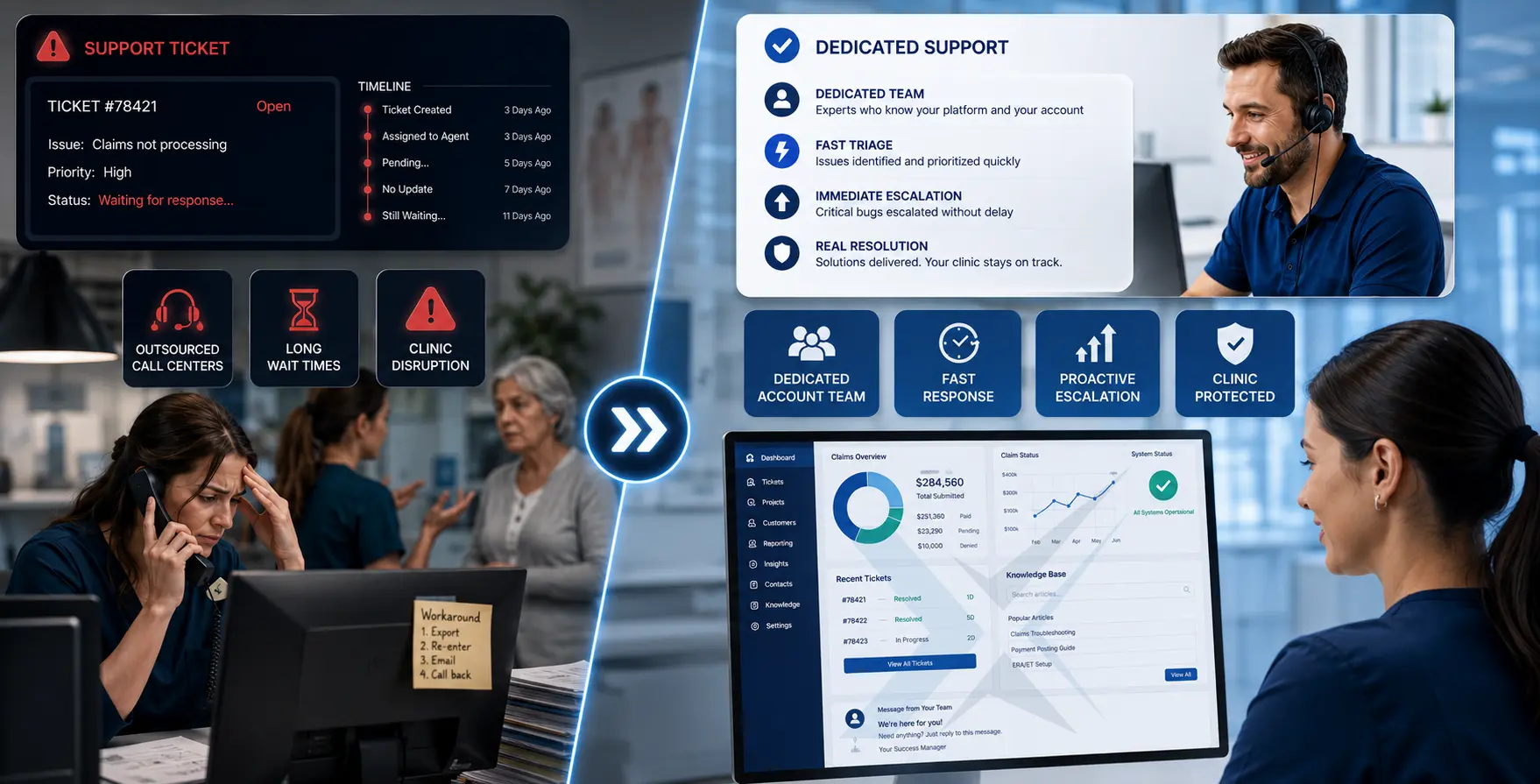
Ask any practice administrator about their worst software memory, and it usually involves support. A critical bug appears, a ticket gets filed, and then… silence. Days turn into weeks. Meanwhile, the front desk is improvising workarounds and patients are noticing the friction.
Legacy vendors often outsource support to disconnected call centers with no real authority to escalate or fix anything quickly.

How Maximus Solves It

Maximus pairs practices with a dedicated support team that actually knows the platform and your account. Issues get triaged fast, critical bugs get escalated immediately, and you’re never stuck waiting on a generic ticket queue while your clinic absorbs the fallout.

Pain Point 3: Hidden Costs and Integration Roadblocks

Legacy EHR pricing is notorious for the bait-and-switch. The base package looks affordable, until you need e-prescribing, a lab interface, or a patient portal, and each one comes with its own separate invoice.
What started as a reasonable monthly cost quietly becomes a stack of surprise fees, and switching later feels even riskier because now there’s more to untangle.

How Maximus Solves It

Maximus EHR is built as an all-inclusive ecosystem. E-prescribing, lab connectivity, and patient portal access are part of the platform, not upsells. What you’re quoted is what you pay, so budgeting for the year ahead doesn’t require guesswork.

Pain Point 4: Zero Mobile Flexibility

Modern care doesn’t happen exclusively at a desktop workstation. Rounding, telehealth visits, and quick chart reviews between patients all demand mobility, yet many legacy systems were never designed for anything but a desktop browser.

The result: clinicians are tethered to a specific room, a specific computer, just to complete basic documentation.

How Maximus Solves It
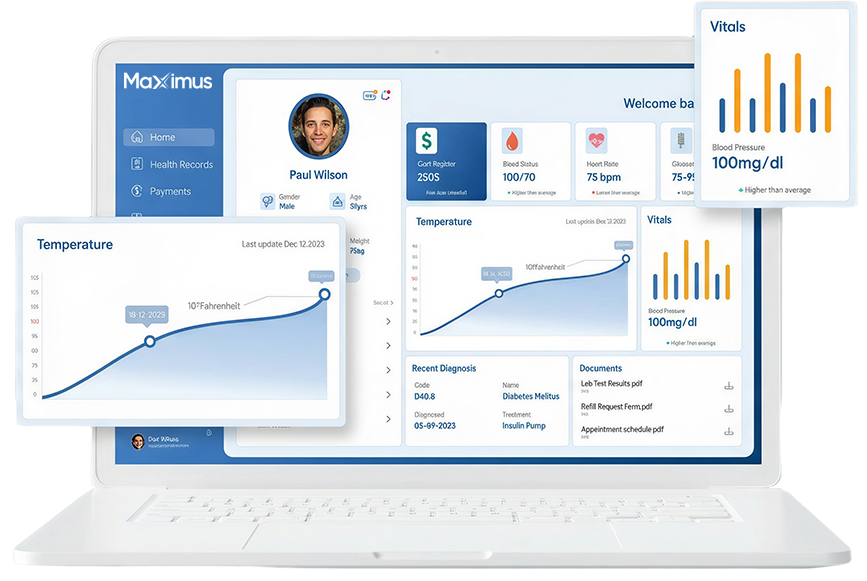
Maximus EHR supports full charting from mobile and tablet devices, with the same intuitive workflow as the desktop version. Review a chart between patients, document a telehealth visit from anywhere, or check a lab result on the go, without waiting to get back to a desk.
Overcoming the Fear of Migration

Overcoming the Fear of Migration

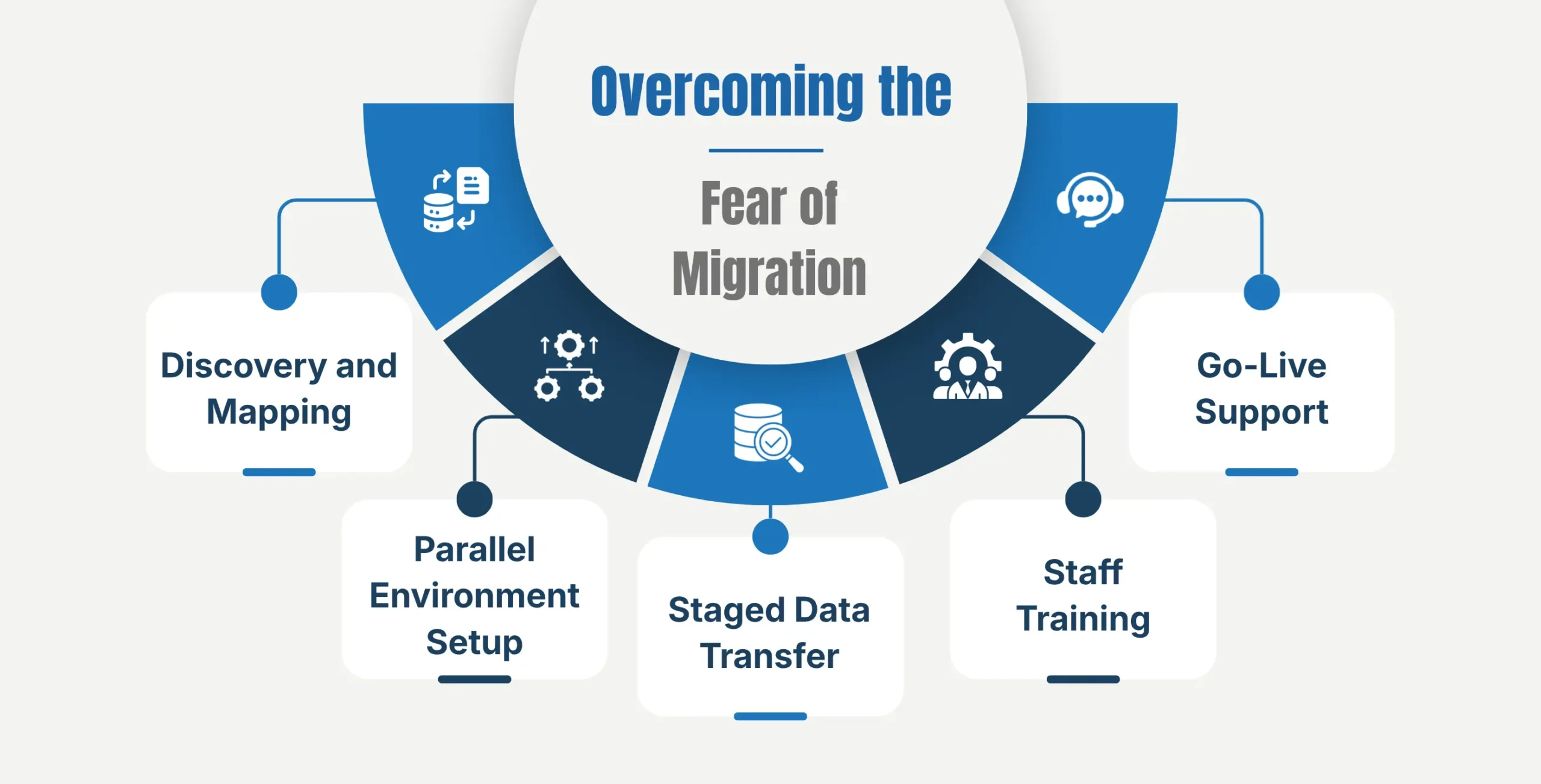
Data migration is usually the biggest reason practices delay switching, and it’s a legitimate concern. Patient records, billing history, and clinical data are not something to move carelessly.

Maximus EHR approaches migration as a structured, risk-free process, not a leap of faith:

Nothing goes live until your team has confirmed it’s ready. That’s the difference between a risky migration and a managed one.

Ready to Make the Switch?

Your staff didn’t sign up to fight software every day. They signed up to take care of patients. If click fatigue, unanswered support tickets, and surprise invoices sound familiar, it’s worth seeing what a modern, billing-native EHR actually feels like.

Book a personalized, zero-pressure workflow demo with Maximus EHR. Bring your team, bring your real workflows, and see exactly how much time and frustration you’ll get back. No obligation, just a clear look at what’s possible.

Schedule Your Free Maximus EHR Demo Today

See how Maximus EHR helps your practice reduce clicks, simplify charting, improve support, avoid surprise costs, and transition confidently with a guided migration process.

FAQs

Why do medical practices switch to a new EHR system?
Most practices switch because their current EHR slows down workflows, has a complicated interface, offers poor customer support, or comes with unexpected costs. A modern EHR can improve efficiency, reduce administrative burden, and enhance the overall experience for both providers and patients.
Is migrating to a new EHR risky?
EHR migration doesn’t have to be risky when it’s properly planned. A structured migration process, including data mapping, testing, staff training, and go-live support, helps ensure patient records remain secure while minimizing disruptions to daily operations.
How can a user-friendly EHR reduce physician burnout?
An intuitive EHR reduces unnecessary clicks, simplifies documentation, and streamlines daily workflows. By spending less time navigating software and more time with patients, providers can reduce after-hours charting and improve work-life balance.
What features should I look for when choosing a new EHR?
Look for an EHR that offers an intuitive interface, mobile accessibility, integrated e-prescribing, patient portals, lab connectivity, transparent pricing, reliable customer support, and seamless billing integration to support your practice’s long-term growth.
How does Maximus EHR make switching easier for medical practices?
Maximus EHR provides a guided migration process that includes data mapping, staged data transfers, workflow testing, staff training, and dedicated go-live support. This approach helps practices transition smoothly while minimizing downtime and maintaining continuity of patient care.

Table of Contents

Maximus | Electronic Health Record

Transform Your
Practice with
AI-Powered EHR

Reduce administrative burden, streamline workflows, accelerate revenue, and deliver exceptional patient care.